We're officially a Great Place To Work® certified company, India | 2026–27

Mayur Patel
Feb 18, 2026
5 min read
Last updated Feb 20, 2026

We transformed Saffro Mellow Coatings & Resins from a traditional paint manufacturer into a tech-enabled commerce and logistics system with real-time driver mapping, payment-state clarity, and a configurable loyalty engine. This was a backend-first operating layer that unified D2C sales, warehouse fulfillment, rider workflows, and compliant communication into one modular system.
The North Star was under operational control. Faster order allocation, transparent rider payments, accurate location-based driver assignment, and repeat purchases driven by loyalty, all without developer dependency for day-to-day admin decisions. We built an API-first architecture designed to scale across locations, handle partial payments cleanly, and support future warehouse expansion without rearchitecture.
Saffro Mellow Coatings & Resins is a paint manufacturing and fulfillment business operating in a distributor-led ecosystem and expanding into direct-to-consumer commerce. The founder wanted to reduce dependence on intermediaries, gain tighter control over margins, and build a structured digital layer to manage products, payments, warehouses, and delivery workflows without operational chaos.
The North Star was operational clarity at scale. The founder wanted a structured system in which orders moved predictably from checkout to warehouse allocation to rider assignment, without confusion about payments, locations, or responsibilities. Every decision was anchored to reducing allocation delays, eliminating payment ambiguity for riders, and ensuring that each warehouse and driver operated within clearly defined digital boundaries.
At the same time, the system had to support repeat commerce. That meant building a configurable loyalty and referral engine that could drive customer retention without engineering intervention for every rule change. The objective was simple but non-negotiable:
This system had to operate inside real-world limits, not ideal conditions. Every architectural decision was shaped by regulatory, financial, and operational constraints that could not be bypassed.
The client needed orders to move from checkout to warehouse allocation to rider assignment without manual intervention or reconciliation confusion. If a rider opened the app, the payment state had to be accurate, whether the order was prepaid, partially paid, or COD, because even small discrepancies would erode trust instantly.
Success also meant administrative independence. The founder wanted the ability to configure referral points, manage FAQs, activate or deactivate features, and control operational flows without depending on developers for every adjustment.
The most fragile layer of this system was payment-state synchronization. Partial payments processed through Razorpay had to reflect instantly and accurately across the admin dashboard and the rider PWA, because any mismatch between what was collected online and what a rider expected to collect at delivery would create operational friction and distrust. We had to design a payment-state-aware logic that handled prepaid, partial, and COD flows without edge-case leakage.
Multi-location driver mapping was equally sensitive. Each driver and vehicle had to be strictly associated with defined warehouse locations, and data integrity had to prevent cross-location misallocation. Add weight-based product variants and DLT-approved messaging constraints, and the margin for error became extremely narrow.
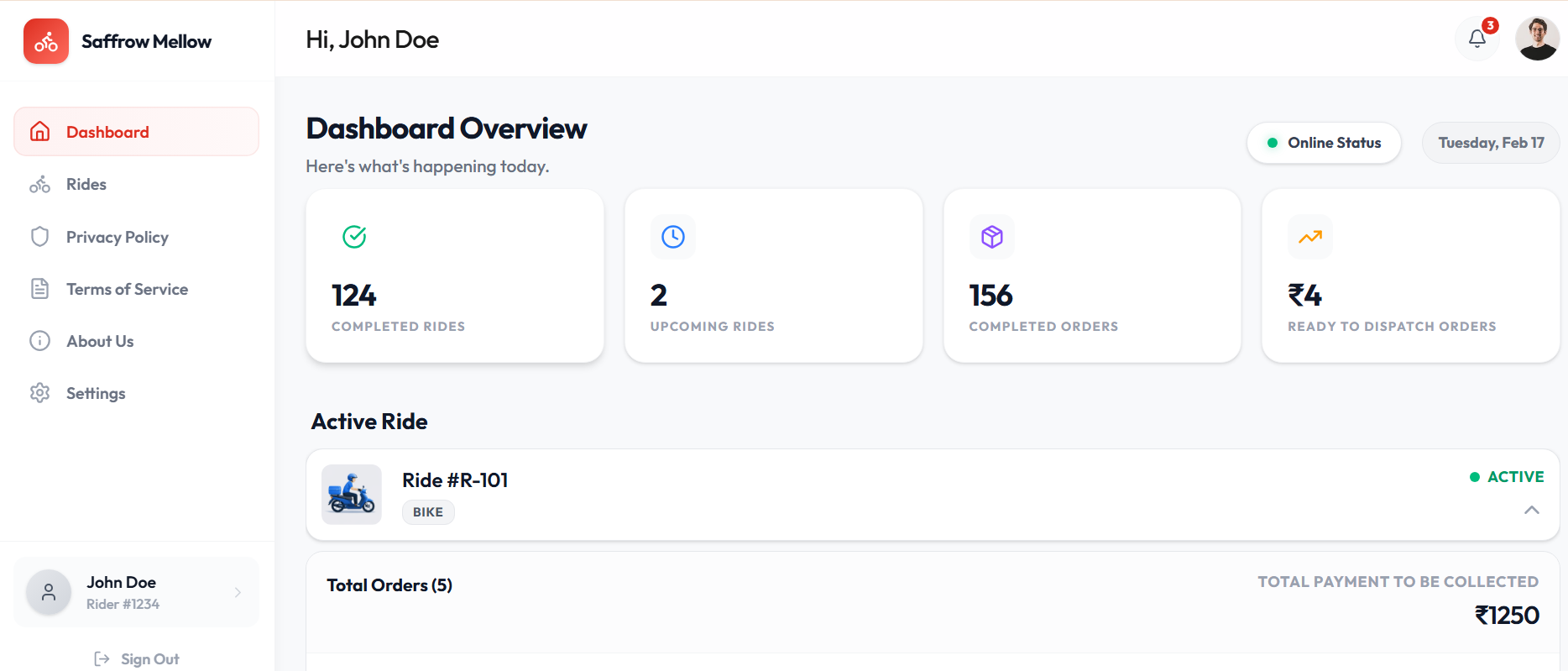
The technology stack was selected for modularity, scalability, and clean API contracts, because this system had to support commerce, logistics, payments, and loyalty without collapsing under future expansion.
This system was designed as a modular operating layer in which commerce, logistics, payments, and loyalty could function independently while remaining structurally connected.
We followed a backend-first development approach because the complexity of payments, logistics, and loyalty logic demanded structural clarity before interface work began. API contracts were defined and reviewed before UI implementation, ensuring that every screen consumed predictable, versioned endpoints rather than loosely defined responses. This reduced rework and prevented frontend dependencies from dictating core system behavior.
Execution was structured in feature-wise Agile iterations with weekly milestone-based deliveries. Each sprint focused on a complete functional block, such as driver mapping or partial payment handling, rather than fragmented UI elements. This approach ensured that high-risk modules were validated early, edge cases were surfaced quickly, and integration points with Razorpay and DLT messaging were tested in controlled cycles.
This platform relied on tightly controlled integrations that could not afford failure. Razorpay powered prepaid, partial, COD, and BNPL flows, with validated webhooks ensuring real-time payment-state accuracy across admin and rider systems. Payment reconciliation was engineered as core logic to prevent misreporting or delivery-side confusion.
We integrated a DLT-compliant SMS gateway for regulatory messaging and NOVU for transactional emails, both mapped to structured event triggers. The system ran on AWS with scalable environments, while Medusa-based commerce services were extended through clean, versioned APIs to maintain consistency and data integrity across modules.
The impact of this system was measured through operational efficiency, payment clarity, and structural control rather than surface-level metrics, because the primary objective was to eliminate friction inside fulfillment and financial workflows.
What makes this project special is the structural shift it enabled. A traditional paint manufacturer moved from distributor-led operations to a digitally orchestrated commerce and logistics system where payments, drivers, warehouses, and loyalty mechanisms operate within defined boundaries. We redesigned the operational backbone to prevent scale from introducing chaos.
This system was built modularly from day one, with reusable patterns for driver mapping, payment-state logic, and configurable rewards that can extend into future multi-warehouse expansion. It proves that even industries considered offline-heavy can run on a structured, API-first architecture without sacrificing operational clarity or compliance discipline.
We continue to refine performance, expand reporting visibility, and prepare the system for tier-based loyalty, wallet functionality, multi-warehouse logic, and route optimization. Each iteration strengthens the modular architecture rather than layering shortcuts, ensuring that scale is absorbed structurally and not patched operationally.
If you are running a traditional business that depends on distributors, manual reconciliation, or loosely connected systems, the shift requires more than a storefront. It requires a commerce and logistics operating layer built with discipline from day one. If that transformation is on your roadmap, we should talk.

Mayur Patel, Head of Delivery at Linearloop, drives seamless project execution with a strong focus on quality, collaboration, and client outcomes. With deep experience in delivery management and operational excellence, he ensures every engagement runs smoothly and creates lasting value for customers.

How Univia Built a Scalable AgriTech System
Univia built a voice-first AgriTech platform now used by 5,000+ farmers, many with limited digital literacy, without compromising usability or system performance. Instead of forcing users to adapt to technology, the system was designed to work the way farmers already operate: voice-led, localised, and simple. The result is a platform that delivers real-time agricultural advisory, market data, and support in a format that doesn’t require training or technical understanding.
This case study breaks down how Linearloop helped design and deliver a system that balances accessibility, scale, and performance under real-world constraints such as low connectivity, high usage variability, and a non-technical user base. Go through the full case study to understand how the architecture, design decisions, and trade-offs came together to make this work.
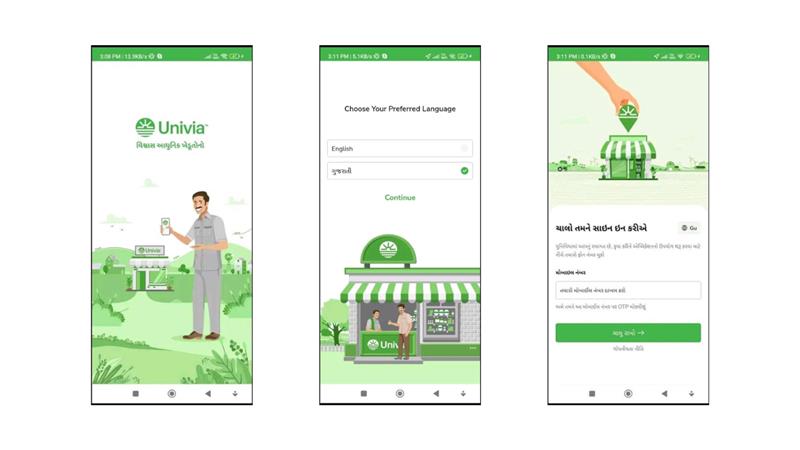
Univia is an AgriTech platform founded by Ravi Varmora, built to address structural gaps in Indian agriculture filled with fragmented supply chains, unreliable inputs, and limited access to timely advisory. The platform focuses on delivering real, actionable agricultural support across the farming lifecycle, from soil-level insights to market access.
At its core, Univia operates with a farmer-first approach. The goal is not just digitisation, but accessibility, making critical information like weather forecasts, mandi prices, and crop guidance available in a format farmers can actually use. It positions itself as a practical support system.
Read More: How BeatRoute Connects Brands, Distributors, and Retailers in One System

The North Star was to build a full-stack agricultural ecosystem that supports farmers across the entire lifecycle, beginning from soil analysis, to crop planning, real-time advisory, and market access. The goal was to create a system where farmers could get accurate, timely guidance and act on it without friction.
Accessibility was central to this. Every layer, from advisory to data delivery, had to work in real-time and in formats farmers could actually use. That meant simplifying interactions, localising content, and ensuring the system could deliver insights like weather updates, mandi prices, and crop calendars without requiring technical effort from the user.
Read More: From Custom Builds to 60 Stores: BVB Media E-commerce Platform Story
The system had to work within real-world constraints that directly impacted architecture, design, and execution decisions:
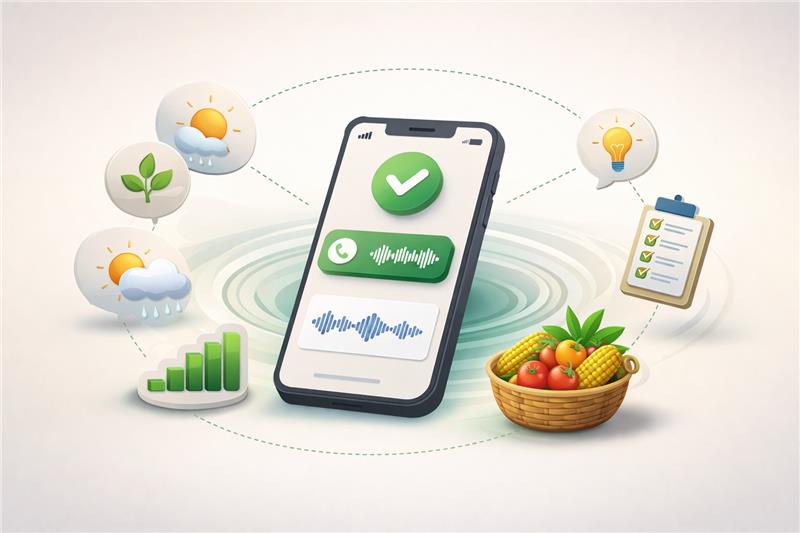
Success was not defined by traffic, installs, or surface-level engagement. It came down to whether farmers could use the platform without assistance and consistently rely on it for day-to-day decisions. If a user with no technical background could open the app, ask a question, and get a usable answer without friction, the system was working.
The second layer of success was seamless interaction between farmers and experts. Voice queries had to move through the system quickly, get resolved efficiently, and return meaningful responses without delays or breakdowns. Adoption by farmers and repeat usage became the only signals that mattered.
Read More: How Linearloop Built a Zero-Loss ERP for a Gold Refinery: Gold VGR ERP Case Study
The system had to handle multiple high-risk engineering challenges simultaneously, where failure in any layer would directly impact usability and trust for non-technical users:
Read More: Instream Case Study: Modernizing a Legacy CRM Without Downtime
The stack was selected to balance performance, scalability, and SEO while supporting real-time interactions and low-bandwidth usage.
| Layer | Technology | Purpose |
| Frontend | Next.js | Server-side rendering for fast load times and SEO optimisation |
| Backend | PHP (Laravel) | Core application logic and admin dashboard management |
| Backend (APIs) | Node.js | Scalable API layer for handling concurrent requests and real-time operations |
| Database | MongoDB | Flexible storage for unstructured data like voice notes and user queries |
| Mobile | Android Native | Lightweight, responsive mobile experience tailored for farmer usage conditions |
The system was designed around how farmers actually interact with information, not how typical apps are structured. Every architectural decision prioritised accessibility, low friction, and reliability under real-world constraints like poor connectivity and low digital literacy. Instead of layering features, the focus was on building a system that could translate complex agricultural workflows into simple, usable interactions while still maintaining backend robustness and scalability.
Also Read : How to Build an Async-First Engineering Tool Stack That Scales
The team followed an Agile workflow structured around Kanban to maintain continuous progress without blocking development cycles. Work was broken down into small, actionable tasks, allowing features like voice query handling, dashboard workflows, and localisation layers to be developed and tested independently. This ensured steady delivery without overloading any part of the system.
Iteration was key to reducing risk. Features were released in controlled phases, validated quickly, and refined based on performance and usability. This approach helped balance speed with stability, especially under a fixed timeline and evolving requirements around user behaviour and system load.
Also Read: How Saffro Mellow Scaled with API-First D2C Architecture
The system relied on external data sources and communication layers to deliver real-time, actionable insights to farmers. These integrations ensured that critical information like weather conditions and market prices was always up to date and accessible within the platform.
| Integration Type | Source | Purpose |
| Weather data | Third-party weather APIs | Deliver real-time weather forecasts to support crop planning and decision-making |
| Market data | Government / mandi APIs | Provide live mandi prices to help farmers make informed selling decisions |
| Communication systems | Email services | Enable notifications, alerts, and system-level communication with users |
Also Read: Multi-File Refactoring with AI: Cursor vs Windsurf vs Copilot
The platform achieved measurable adoption with 20,000+ downloads and 5,000+ active farmers using it for daily decision-making. More importantly, the system handled increasing volumes of voice queries and real-time data without downtime, validating the backend architecture under real-world conditions. SEO improvements also strengthened discoverability, ensuring the platform could scale its reach alongside usage.
The system was built with scalability in mind, allowing future expansion across data sources, advisory layers, and integrations. The architecture supports additional APIs, deeper personalisation, and extended workflows without requiring a rebuild. This ensures the platform can evolve as usage grows while maintaining the same level of accessibility and performance.
Also Read: How to Eliminate Decision Fatigue in Software Teams
Univia proves that building for real-world users requires more than clean interfaces and modern stacks. It requires aligning system design with how people actually think, speak, and operate. By prioritising voice, localisation, and simplicity, the platform removed friction at every layer and delivered a system farmers could trust and use without assistance.
If you’re building products where usability, scale, and real-world constraints collide, this is where most systems break. Linearloop helps you design and engineer systems that work in production. Reach out to Linearloop if you’re looking to build something that actually gets used.

Mayur Patel
Mar 27, 20266 min read

How BeatRoute Connects Brands, Distributors, and Retailers in One System
Retail distribution businesses still operate on fragmented systems. Field sales teams report activity through spreadsheets or WhatsApp. Distributor orders move through calls and manual records. Retailer data remains scattered across tools. For industries like FMCG, pharmaceuticals, consumer goods, and building materials, this lack of visibility slows decisions, weakens sales execution, and creates operational blind spots across the distribution network.
This case study examines how BeatRoute approaches this challenge. BeatRoute is a B2B SaaS platform designed to digitise distributor-led retail sales operations. It connects brands, distributors, and retailers through a single system that supports sales automation, order management, and real-time sales visibility. Continue reading to understand how this platform redesign addresses the structural problems of retail sales management.
Read more: Why Teams Optimize Conversion Rate Instead of Revenue
BeatRoute operates in industries where sales move through distributor networks rather than direct channels. Sectors like FMCG, pharmaceuticals, consumer goods, and building materials depend on large field sales teams that interact with distributors and retail stores daily. Brands need visibility across this chain, but operational data is often scattered across spreadsheets, phone calls, and informal reporting systems.
BeatRoute is a B2B SaaS platform built to modernise this distribution model. The platform centralises field sales operations by connecting brands, distributors, and retailers in a single digital system. It enables sales force automation, order management, route planning, and performance tracking while replacing fragmented reporting with real-time operational visibility across retail sales networks.
Read more: Why Some Lead Form Fields Kill Conversions
The project’s North Star was to improve visibility and operational control across distributor-led retail sales networks. The objective was to design a platform that helps brands, distributors, and field sales teams operate from the same system rather than fragmented tools.
Read more: From Custom Builds to 60 Stores: BVB Media eCommer Platform Story
Retail distribution operates through a multi-layered network of stakeholders. Brands depend on field sales teams to manage retailer relationships, while distributors handle order fulfillment and inventory movement across regions. In many companies, these activities still run through disconnected tools such as spreadsheets, phone calls, and informal reporting channels. This fragmented setup makes it difficult for businesses to track sales performance, monitor distributor activity, or maintain consistent retailer engagement.
The complexity increases as distribution networks scale. Sales teams operate across multiple territories, distributors manage inventory and payments, and retailers expect timely order fulfilment. Without a unified system, operational data remains scattered across different sources, slowing decision-making and creating gaps in visibility. BeatRoute addresses this structural challenge by designing a platform that centralises sales operations and connects all stakeholders in the retail distribution ecosystem.
Read more: How to Optimize Demo Request Flows Without Disrupting Sales Infrastructure
The engagement focused on designing the user interface and experience for BeatRoute’s sales enablement platform. The scope was limited to product design, to create clear workflows for retail sales operations used by multiple stakeholders in distributor-led sales networks.
Read more: How Linearloop Built a Zero Loss ERP for a Gold Refinery: Gold VGR ERP Case Study
For the client, success meant improving how retail sales operations function day to day. The platform needed to support stronger sales execution by giving field teams clearer workflows, faster order handling, and better visibility into sales activity across distributor networks. Operational efficiency, rather than feature complexity, was the primary benchmark.
The design also had to support smoother collaboration between distributors and retailers. Interfaces were structured around real operational workflows such as order placement, account tracking, and sales reporting. Instead of abstract product features, the focus was on building tools that reflect how retail distribution actually works across field teams, distributor partners, and retail stores.
Read more: Modern AI Data Stack Architecture Explained for Enterprises
Retail distribution platforms must support multiple stakeholders working within the same operational system. The BeatRoute design needed to accommodate three core user groups, each with distinct responsibilities, workflows, and expectations from the platform.
Read more: From Manual Coordination to Automated Logistics: Sarthitrans Case Study
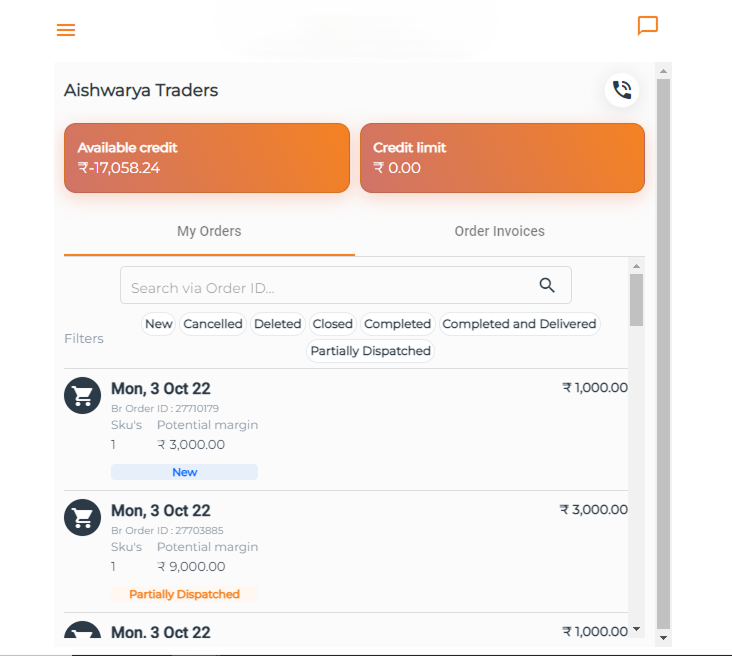
The design focused on creating clear operational interfaces for core retail sales workflows. Each module was structured to support a specific function within the distributor-led sales ecosystem, ensuring that field teams, distributors, and retailers could manage sales activities from a single system.
| Platform module | Operational role |
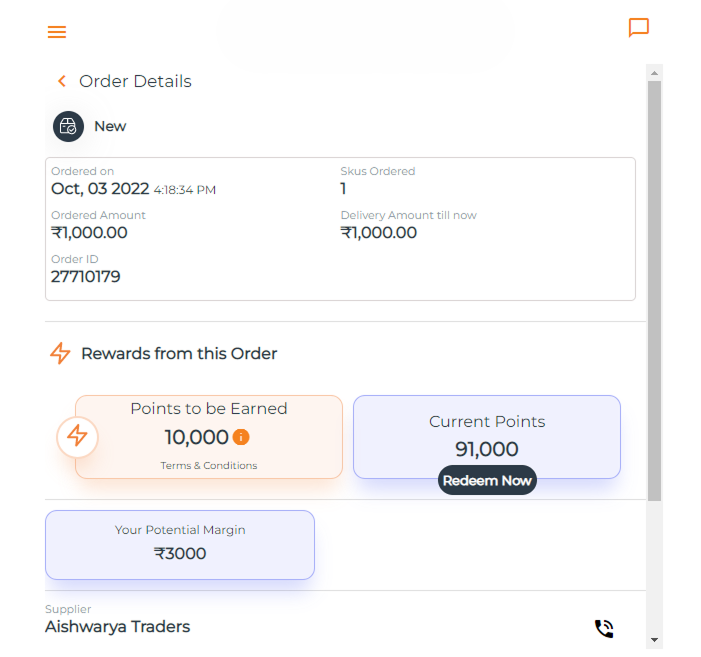
| Reward points management | Displays reward points earned by users and enables redemption through a structured interface, supporting incentive programs designed to motivate sales teams and channel partners. |
| Order management interface | Provides mobile-friendly workflows for creating, tracking, and managing retailer orders, enabling field sales representatives to place and monitor orders directly during store visits. |
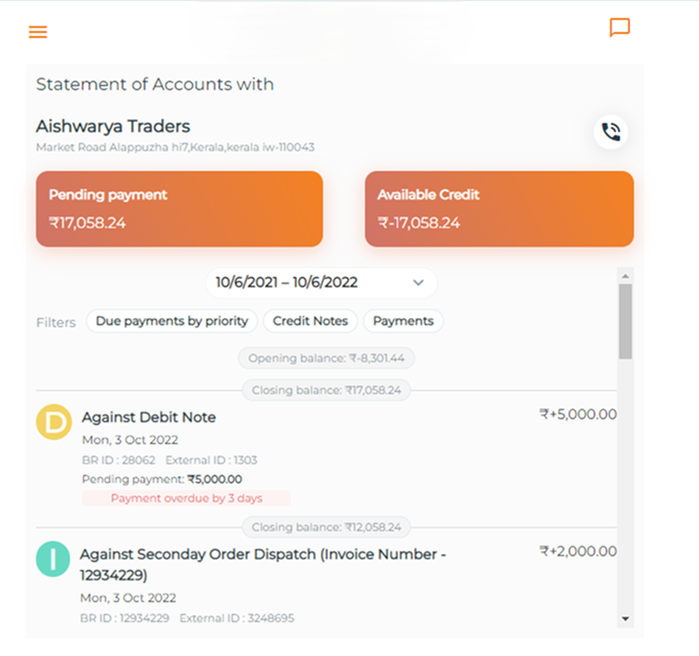
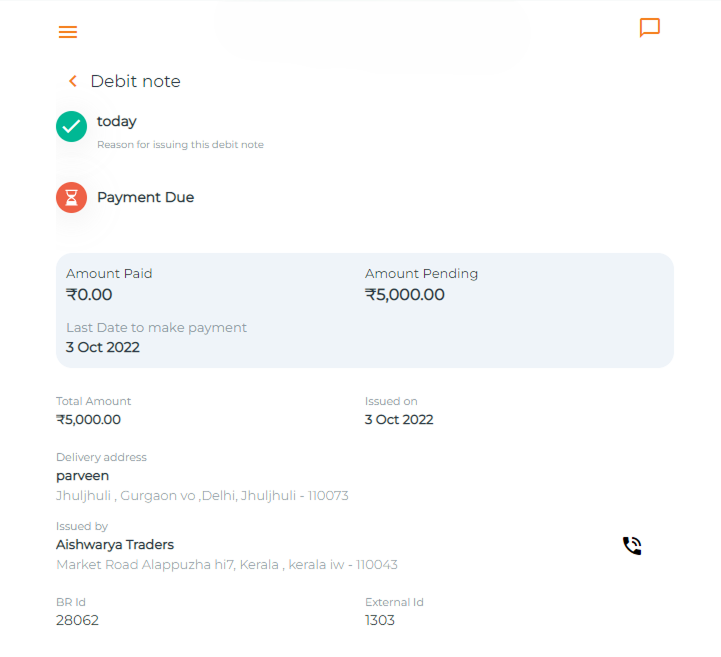
| Statement of accounts dashboard | Allows distributors and traders to view transaction records, track due payments, monitor credit notes, and review payment history through filtered financial statements. |
| Sales activity visibility | Presents sales activity data and performance insights, enabling brands to monitor field sales operations and track retail engagement across their distribution network. |
The project focused on interface design and user experience architecture rather than engineering implementation. The design environment was structured to support collaborative workflows, iterative feedback, and clear handoff specifications for product development teams.
Read more: Instream Case Study: Modernizing a Legacy CRM Without Downtime
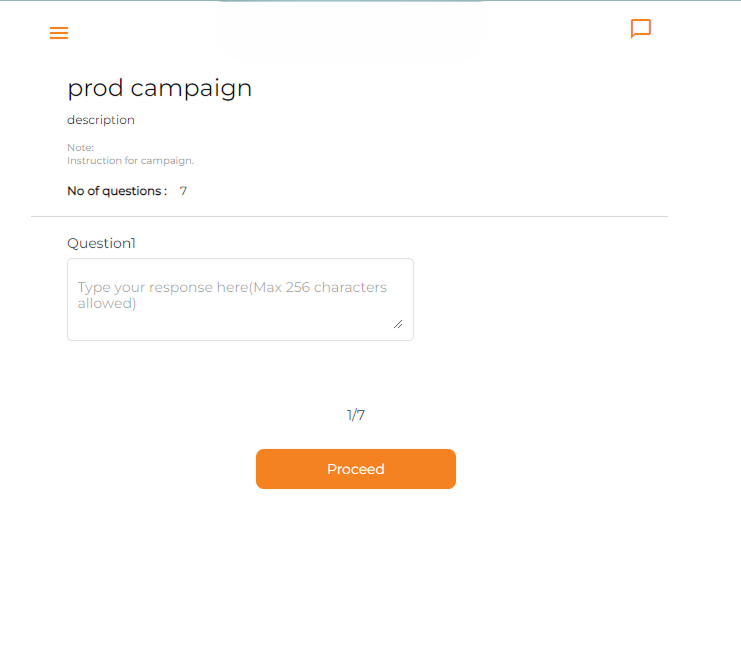
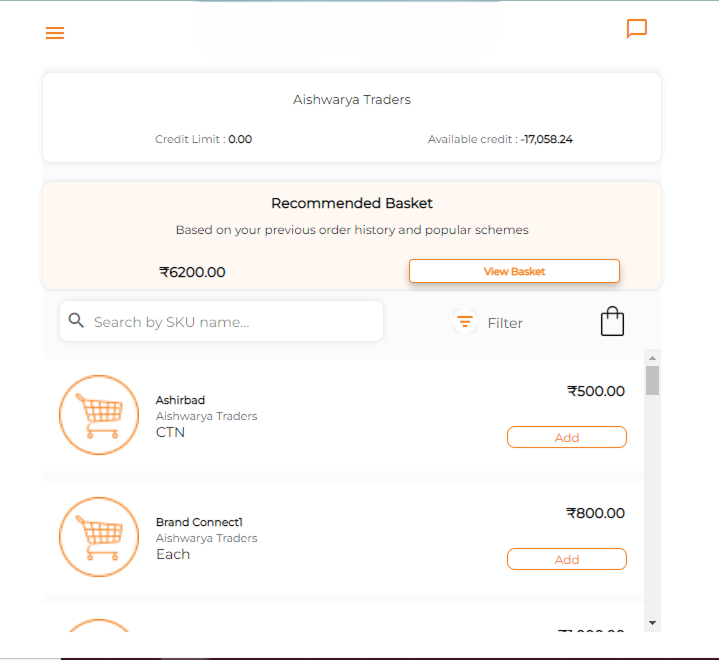
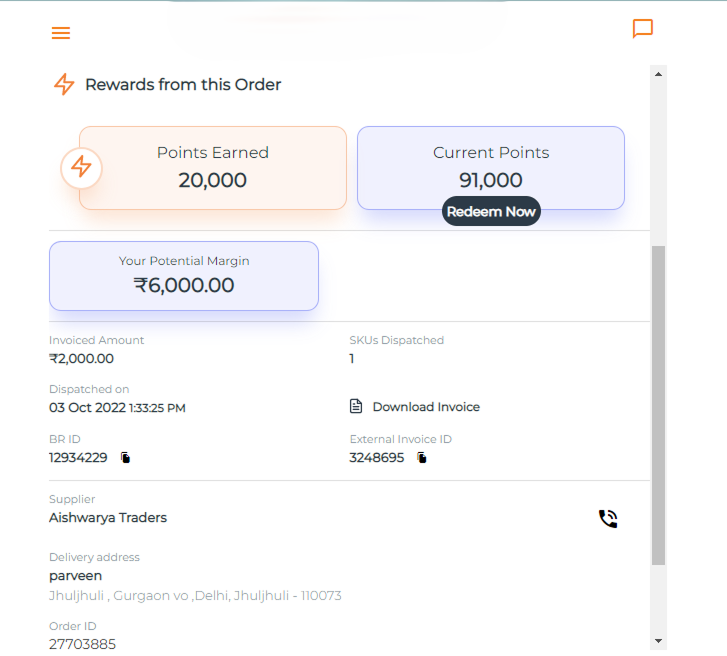
The design approach focused on building a unified operational system rather than a collection of isolated features. The goal was to structure the platform around real retail workflows so brands, distributors, and retailers could operate within the same visibility layer. Execution followed an Agile design process with iterative refinement and stakeholder collaboration.
The platform was conceptualised as a connected ecosystem where brands, distributors, and retailers interact through shared workflows. Interfaces were designed to reflect real operational relationships across the retail distribution chain rather than independent feature modules.
Design decisions prioritised workflow clarity. Sales activities, order management, and financial tracking were structured into intuitive interfaces that allow stakeholders to access operational data without relying on fragmented tools or manual reporting.
The project followed an Agile design approach where interface prototypes were continuously refined through structured iterations. Each cycle focused on improving usability, simplifying workflows, and aligning the product experience with field sales operations.
Design reviews were conducted with client stakeholders throughout the process. Feedback loops ensured the interface aligned with real retail distribution workflows and operational expectations before the final design handoff.
Read more: How to Deploy Private LLMs Securely in Enterprise
No third-party integrations were included during this engagement. The project scope was limited to designing the user interface and user experience architecture for the BeatRoute platform. The design focused on structuring core product workflows such as sales activities, order management, and account visibility. Integration with external systems was not part of the design phase, allowing the work to concentrate on interface clarity and operational usability.
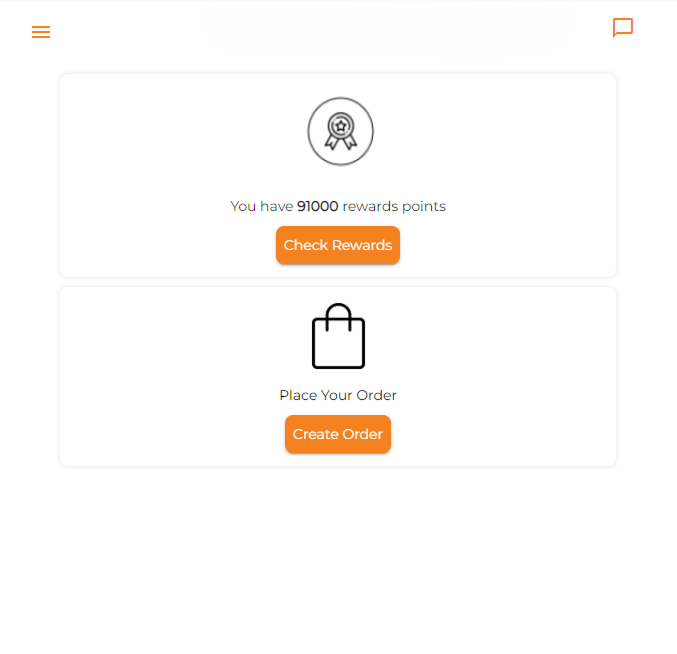
The design was received positively by the client and key stakeholders involved in the project. The interface structure aligned with the operational workflows used in retail distribution, making it easier to visualise how field sales teams, distributors, and retailers would interact with the platform.
Stakeholders particularly appreciated the clarity of the workflows and the usability of the interface. The design translated complex retail sales operations into structured screens and dashboards, enabling a clearer understanding of how the platform could support real-world sales activities.
Read more: RAG vs Fine-Tuning: Cost, Compliance and Scalability Explained
Retail distribution networks operate across multiple stakeholders, territories, and operational workflows. Without a unified system, brands struggle to maintain visibility across field sales activities, distributor coordination, and retailer engagement. BeatRoute demonstrates how thoughtful product design can bring these fragmented processes into a single operational platform, enabling clearer workflows, better data visibility, and more structured retail sales management.
If you are building a B2B platform that must support complex operational ecosystems, the design approach becomes critical. At Linearloop, we work with teams to design scalable product experiences for systems that involve multiple users, workflows, and operational dependencies. If you are planning a similar transformation, reach out to Linearloop to explore how the right design architecture can support your product vision.
Mayur Patel
Mar 16, 20266 min read