We're officially a Great Place To Work® certified company, India | 2026–27

Mayank Patel
Dec 4, 2025
8 min read
Last updated Dec 4, 2025
Most engineering teams ship features at a steady pace, yet very few create real innovation. Sprint boards stay green, velocity looks healthy, and everyone feels productive, but the work rarely leads to meaningful change.
Innovation is not luck. It is engineered. Teams build systems that repeatedly produce them.
This is where product engineering becomes central. It aligns problem-solving, customer insight and technical execution so teams move from output to outcomes. But the biggest differentiator is engineering culture. It acts like the operating system that shapes how people think, collaborate and build.
In this guide, you will learn how to create a culture where innovation becomes a predictable result of how your teams work. Expect clear frameworks, operating models, leadership behaviours and rituals you can put in place immediately.
Let’s dig in.
Innovation is a repeatable system. It is not a spark. It is a machine.
A strong engineering culture makes this possible because culture is the sum of:
When engineering and product thinking move in sync, innovation becomes easier. Engineers are not just “taking tasks.” They understand why something matters, how customers behave, and what problem each line of code actually solves.
The strongest cultures share four traits:
Innovation is never about “How many stories did we close?” It is about “What changed for the customer because of what we built?”
Also Read: Product Engineering vs. Traditional Software Development: Which One Do You Need?
Let us get clear on one thing:
Product engineering is not the same as software development.
Software development ships features while product engineering solves problems.
Product engineering blends engineering, product strategy, customer insights, and design into a single integrated flow. Engineers work with context, not just requirements. They are involved earlier, during discovery, problem-framing, and prototyping. They know the customer system, not just the codebase.
Here is the shift product engineering brings:
This cross-functional alignment accelerates innovation by enabling engineering teams to stop building in the dark. They understand the constraints, users' mental models, edge cases, and motivations, everything that helps them build smarter.
When outcomes drive decision-making, innovation becomes faster, more consistent, and closer to customer reality.
Pro tip: Make sure your engineers know why a PRD (Product Requirements Document) exists. Bring them earlier into discovery conversations. You will see instant shifts in creativity and execution quality.
Also Read: Oil & Gas Custom Software Solutions with Complete Guide
There are three big levers that separate high-innovation engineering teams from feature factories. Let us break down the real drivers.
Innovation dies in cultures where people fear being wrong.
High-performing teams operate in a safe-to-fail environment. Engineers experiment more when they know their ideas will not be judged prematurely. They ask better questions, challenge assumptions and flag risks earlier.
This is why the best teams practise blameless post-mortems, where the conversation is about learning. When people stop hiding mistakes, the organisation stops repeating them.
Autonomy plays a complementary role. When engineers can make decisions based on architecture, sequencing, and approach, they develop real ownership.
Pro tip: In your next incident review, ask, “What made this easy to miss?” instead of “Who missed this?” Watch how the conversation changes.
Teams that rely on gut feeling or tribal knowledge move more slowly, while those that align on clear engineering principles move faster.
Principles like:
These may sound basic, but they reduce friction, decision fatigue, and unnecessary debates. When engineers know the “rules of the road,” they spend less time guessing and more time innovating.
Principles act like constraints, as these are surprisingly powerful for creativity.
Pro tip: Pick 5 engineering principles, write them down, and embed them into design docs, onboarding, and code reviews. You will see better alignment almost immediately.
Here is the truth: Innovation dies when engineers lack context.
If your engineers do not know how customers behave, what they struggle with, or why they abandon your product, they will always default to building what was asked, not what is needed.
Customer-centric engineering starts with giving engineers rich context:
When engineers see the real-world friction customers face, they proactively solve problems by designing better trade-offs, anticipating edge cases, and proposing simpler solutions.
Pro tip: Add a “User Anecdote” section to your PRDs. A single customer story is far more powerful than a list of requirements.
Also Read: How to Develop a Pharmacy Management Software
The world’s most innovative engineering teams rely on structure. Innovation becomes predictable when the operating model makes it easy.
Let us break down the models that move the needle.
Cross-functional pod structures (product, engineering, and design) eliminate the old waterfall handoff. Teams own customer outcomes. They make decisions locally and ship faster.
Pods give engineers context, autonomy, and influence, the three primary ingredients innovation loves.
Pro tip: Give each pod a single “North Star metric.” It creates clarity and reduces noise.
If innovation has no protected time, it never happens. A consistent 10% to 20% experimentation slot empowers engineers to:
This time often produces breakthroughs that no roadmap meeting would ever generate.
Google, HubSpot, and Notion all use some flavour of this because it works.
Pro tip: Pair experimentation time with monthly “Innovation Reviews.” Teams share what they explored and what they learned, not just what they shipped.
Documentation is clarity that accelerates innovation.
RFCs (Request for Comments), design docs, and lightweight architectural proposals help teams think better, align faster, and reduce rework.
Great innovation is often the result of:
Documentation creates that thinking space.
Pro tip: Require a design doc for any change affecting more than one team. It avoids expensive surprises.
Innovation slows down when teams stop learning. Tools evolve. Patterns shift. Customer expectations rise.
Companies that innovate consistently build internal knowledge pipelines through:
As a result, engineers level up faster. Teams solve problems in more creative ways. Collaboration strengthens when knowledge is distributed rather than siloed.
Pro tip: Rotate engineers across pods every 6 to 12 months. It cross-pollinates skills and expands collective thinking.
Also Read: How to Build a Telehealth Mobile App
You cannot build an innovation-driven engineering culture without leadership that reinforces innovation.
Here is what the strongest engineering leaders do consistently:
Picture a VP of Engineering who shows an early prototype during a weekly demo. When leaders reveal rough drafts and failed attempts, teams stop hiding imperfections. Transparency becomes safety. Engineers experiment more freely because leadership has normalized imperfect beginnings as part of progress.
When leaders kick off a project by sharing user pains, failed flows, adoption data, and success metrics before assigning anything, engineers understand the full story. When context flows freely, teams move faster, and micromanagement disappears because clarity already exists.
Imagine a manager asking, “What problem are we solving for the user?” instead of “Did you finish the ticket?” This shift encourages deeper thinking and smarter trade-offs. Engineers learn to question assumptions early. The result is better solutions, fewer rewrites and more intentional innovation.
Great leaders highlight learning moments. A clean design doc, a well-articulated trade-off or a thoughtful rollback earns praise. When clarity becomes as recognisable as shipping, engineers invest more in understanding. Learning becomes currency, and innovation compounds without being forced or artificially inflated.
Teams walk through decisions, failures and discoveries. Nothing is hidden. Alignment becomes rhythm, not ceremony. Engineers absorb how others reason. Silos soften. Innovation accelerates because everyone sees how problems evolve.
Rituals are the hidden engine of innovation. They create rhythm, discipline, and momentum. The best teams use rituals like:
To build an innovation engine, you need signals that tell you whether the culture is enabling teams to think better, move faster, and solve the right problems. The good news is that innovation leaves traces everywhere. These are the factors you have to look for:
These are early indicators of how smoothly your engineering and product systems are functioning on a daily basis.
These give you a quick read on the team’s momentum and whether work is flowing or getting stuck.
These show how well your innovation efforts land in the market.
They help you understand if innovation is translating into customer value and long-term impact.
Some of the most honest signals show up in the room, in conversation, and in how your team behaves under pressure.
These reveal whether the culture feels safe, creative, and aligned—or heavy, quiet, and resistant to change.
If you want innovation to show up consistently, you need a framework that teams can actually follow. Something that shapes day-to-day decisions. Here’s a step-by-step detailed framework to build your innovation culture:
Everything starts here. Principles act like the rules of thinking for your organisation. They reduce decision fatigue, create a common language, and remove hidden friction. When teams know what good looks like, they move faster.
This is the shift most organisations never make. Move your pods from “deliver these tickets” to “improve this customer behaviour.” Engineers suddenly see the full picture, and ownership becomes real.
Innovation needs consistency. Weekly demos, design reviews, and hack days create predictable touchpoints where ideas surface, thinking sharpens, and teams learn from each other. Rituals keep the engine warm even when the roadmap gets heavy.
If you reward speed alone, teams will optimise for velocity. If you reward clarity, learning, and problem-framing, they will innovate. Incentives are cultural steering wheels. Adjust them, and you adjust the culture.
Retros, culture check-ins, pulse surveys, and lightweight KPIs help you see what is working and what is slipping. Innovation cultures drift over time unless they are intentionally recalibrated. The loop keeps everything honest.
Innovation is not a lucky streak. It’s the output of a culture that knows how to think, build, learn, and adjust together. When your teams have clarity, autonomy, and the right rituals, product engineering becomes less about shipping features and more about creating real customer impact.
The shift happens quietly. Meetings feel sharper, ideas surface earlier, engineers step forward with better questions, problems get framed more clearly, and over time, innovation starts becoming the natural rhythm of how your organisation operates.
Get the culture right, and innovation does not need to be pushed. It simply shows up consistently.


Vibe Coding Workflow: How Senior Engineers Build Faster Without Chaos
Engineering teams are shipping faster than ever with AI-assisted development, but most workflows haven’t caught up. You still see over-documented plans, delayed execution, and rigid processes slowing down senior engineers. On the other side, moving fast often turns into messy, unstructured coding that creates long-term system debt. The real problem is the lack of a controlled way to move fast without breaking architectural integrity.
This is where a senior-level vibe coding workflow fits. It’s structured execution driven by intent, constraints, and experience. You move quickly, but every decision is anchored in systems thinking. This blog breaks down what that workflow actually looks like for architects and experienced engineers who need to build fast without losing control.
Read more: How BeatRoute Connects Brands, Distributors, and Retailers in One System
Vibe coding in engineering does not mean writing code without structure. It refers to executing quickly with minimal upfront formalisation while still operating within clear system intent. The difference is in control. At a junior level, improvisation often leads to fragmented logic and unstable systems. At a senior level, the same speed is guided by constraints, prior patterns, and an understanding of how systems behave under load and change.
This is best understood as controlled improvisation. Decisions are made in motion, but they are not arbitrary. A senior architect relies on experience to anticipate failure points, choose acceptable trade-offs, and keep the system adaptable. The architecture may not be fully documented upfront, but it exists implicitly in how components are shaped, connected, and evolved during execution.
Read more: Why Teams Optimize Conversion rate Instead of Revenue

Traditional engineering workflows are designed for predictability, not speed. At senior levels, this creates friction because decisions are delayed, execution is fragmented, and systems evolve slower than the problem space. The mismatch becomes visible in fast-moving environments where adaptability matters more than upfront completeness.
Read more: Why Some Lead Form Fields Kill Conversions
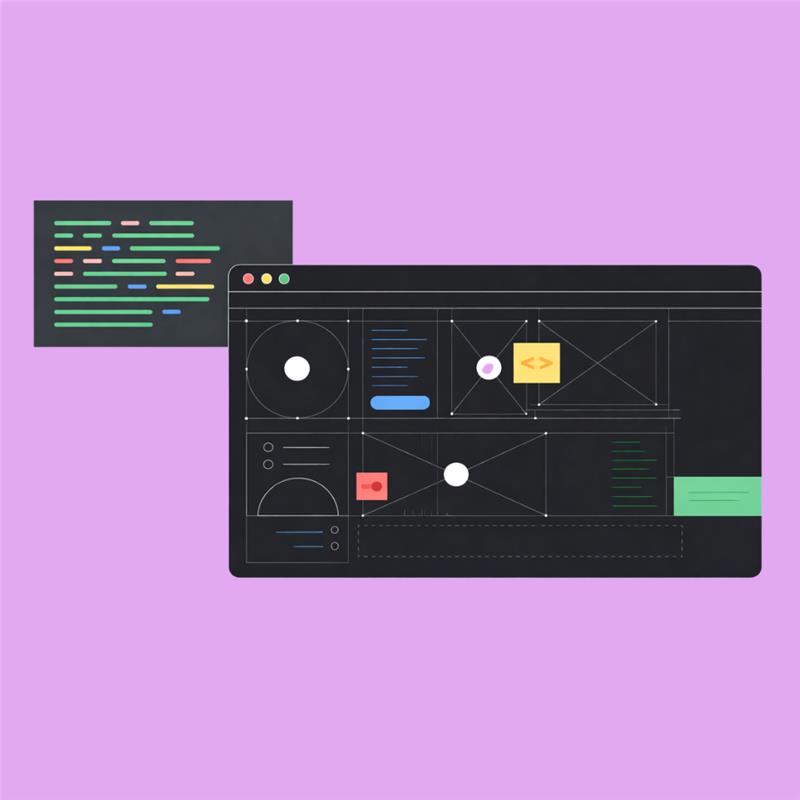
The vibe coding workflow operates as a structured system. It follows a clear sequence:
intent → risk → execution → refinement
where decisions are made in motion but remain anchored to system constraints. Each step builds on the previous one, ensuring speed does not compromise architectural control.
Senior architects begin with clarity on what the system must achieve. The focus is on defining boundaries that guide execution without slowing it down. This allows teams to move early while still aligning decisions with business goals, technical constraints, and expected system behaviour under real conditions.
Instead of investing time in detailed diagrams, architects sketch directions quickly. The goal is to understand system shape and dependencies without locking decisions prematurely. This approach surfaces unknowns early and enables flexibility, allowing the architecture to evolve naturally as more information becomes available during actual implementation and testing phases.
Execution begins with the most uncertain part of the system, not the easiest. This reduces the chances of late-stage failures. By validating risky components early, such as integrations or scaling constraints, architects ensure that the foundation is stable before expanding, preventing wasted effort on features built on unverified assumptions.
Rather than building isolated layers, the system is developed in thin, end-to-end slices. This ensures that every piece of work contributes to a functioning system. Early working flows provide faster feedback, reveal integration issues sooner, and help validate real-world usability before investing heavily in incomplete or disconnected modules.
Senior engineers optimise for speed by offloading repetitive work. AI tools, templates, and reusable patterns handle boilerplate, allowing focus on critical decisions. This shifts effort from writing code to shaping systems, ensuring that time is spent on architecture, trade-offs, and problem-solving rather than low-value implementation details.
Structure is not delayed to the end. Architects continuously reshape the system as it evolves, removing weak abstractions and improving clarity. This prevents technical debt from accumulating and keeps the system adaptable, ensuring that early decisions do not become constraints as complexity increases over time.
Decisions are validated through actual system behaviour, not assumptions. Testing with real data and realistic scenarios ensures that the system performs as expected. This reduces reliance on theoretical design and helps uncover issues that only appear under real conditions, leading to more reliable and scalable systems.
Once the system demonstrates working flows, structure is formalised. This includes refining abstractions, improving modularity, and standardising patterns. Delaying structure ensures that decisions are based on real insights rather than assumptions, resulting in a cleaner and more resilient architecture aligned with actual system behaviour.
Documentation focuses on what matters for future understanding and scalability. Instead of documenting everything, architects capture key decisions, trade-offs, and system boundaries. This keeps documentation concise and useful, ensuring that it supports decision-making without becoming a maintenance burden or slowing down development velocity.
Read more: From Custom Builds to 60 Stores: BVB Media eCommerce Platform Story
Vibe coding and traditional architecture workflows operate on fundamentally different execution models. One optimises for speed under uncertainty, the other for predictability under defined scope. The choice depends on system maturity, risk tolerance, and team structure.
| Parameter | Vibe coding workflow | Traditional architecture workflow |
| Speed of execution | High velocity with early system movement and rapid iteration cycles | Slower due to upfront planning, reviews, and phased execution |
| Risk handling | Risk-first approach; highest uncertainty components validated early | Risk deferred; critical issues often discovered later in execution |
| Documentation approach | Minimal, decision-focused documentation created during or after execution | Heavy upfront documentation before implementation begins |
| Adaptability to change | High; system evolves continuously based on real signals and feedback | Low to moderate; changes require rework across predefined plans |
| Feedback loops | Short and continuous; driven by working system behaviour | Long and delayed; dependent on phase completion and approvals |
| Team fit | Small, experienced teams with strong system intuition and ownership | Larger teams requiring alignment, coordination, and standardisation |
| Best use cases | 0→1 builds, high-uncertainty systems, fast-moving environments | Enterprise systems, regulated environments, multi-team dependencies |
| Failure impact | Failures surface early and are easier to correct | Failures surface late and are costlier to fix |
This workflow relies on experience. Senior engineers operate with built-in pattern recognition. They have seen similar system behaviours, failure modes, and scaling challenges before. This allows them to make fast decisions without losing control. Intuition is compressed knowledge applied in real time, guiding trade-offs, architecture choices, and execution flow.
When misapplied, the same approach breaks down quickly. Without experience, rapid execution turns into unstable systems, poor abstractions, and hidden technical debt. Failures are not anticipated, and refactoring becomes reactive instead of controlled. This is why vibe coding is an advanced execution model that depends on the ability to predict, absorb, and correct failure early.
Read more: How to Optimize Demo Request Flows Without Disrupting Sales Infrastructure
This workflow fits environments where speed and uncertainty dominate. Early-stage startups, 0→1 product builds, and ambiguous problem spaces benefit the most because requirements are incomplete and evolve during execution. In these scenarios, waiting for perfect clarity slows progress. A vibe coding approach allows teams to move early, validate assumptions quickly, and shape the system based on real feedback instead of static plans.
It is also effective in AI-driven development, where behaviour is probabilistic and cannot be fully specified upfront. For example, building an AI-powered recommendation engine, integrating third-party APIs with unpredictable responses, or launching a new SaaS feature with unknown usage patterns. In each case, rapid iteration with controlled adjustments enables faster convergence toward a working, scalable system.
Read more: Personalization vs Broad UX Changes in Conversion Rate Optimization Services
Vibe coding loses effectiveness in environments where predictability, coordination, and compliance outweigh speed. In such systems, uncontrolled iteration creates misalignment, audit risks, and integration failures.
Read more: Modern AI Data Stack Architecture Explained for Enterprises
Vibe coding is about executing with speed while maintaining invisible architectural discipline. The system may not look structured at the start, but every decision is anchored in constraints, trade-offs, and real-world validation. This is how senior engineers build quickly without compromising long-term stability or scalability.
If your team is trying to move faster without losing control, the problem is the execution model. At Linearloop, we design systems that allow high-velocity development without breaking architecture. Build fast, but build with intent, that is where real engineering leverage comes from.

Mayank Patel
Mar 19, 20266 min read

Product Engineering Guide: How Businesses Build Scalable Products
Most teams fail at building products because they treat product development as a sequence of features instead of a system. Product engineering fixes that gap. It brings engineering discipline into every product decision, from what you build first to how the system scales, evolves, and stays maintainable over time. Instead of shipping fast and fixing later, you design for reality: changing user behaviour, growing traffic, technical debt, and long-term cost.
If you’re building a SaaS product, an internal platform, or a customer-facing application, product engineering helps you move with clarity. You stop guessing. You start making trade-offs deliberately. This guide breaks down what product engineering really means, how it works step by step, and how you can apply it to build products that last.
Product engineering is the discipline of building a product as a long-lived system. It covers everything from architecture and development to testing, deployment, scaling, and continuous improvement across the product’s lifecycle.
At its core, product engineering connects three things that are often treated separately: how the system is built, how people use it, and how the business grows. The goal is to make sure every technical decision supports reliability, performance, and change over time.
Unlike isolated development efforts, product engineering focuses on:
This is why many businesses turn to product engineering services when they outgrow feature-driven development. Product engineering ensures early choices do not become long-term constraints, and that the product can evolve without constant rewrites or fragile workarounds.
Also Read: How to Work Agile in Product Engineering
Although the terms are often used interchangeably, product engineering and product development are fundamentally different in scope and intent.
The table below breaks down the difference clearly.
| Aspect | Product engineering | Product development |
| Core focus | Building a product as a scalable, long-term system | Delivering features to meet immediate requirements |
| Time horizon | Long-term product lifecycle and evolution | Short- to medium-term delivery goals |
| Decision-making | Architecture-first, with deliberate trade-offs | Feature-first, often driven by speed |
| Scalability | Designed into the system from the beginning | Addressed later, usually after issues appear |
| Maintainability | High priority, with clean, adaptable codebases | Often secondary to feature velocity |
| Business alignment | Engineering choices align with evolving business strategy | Alignment mainly at the feature or release level |
| Risk management | Anticipates technical debt, performance, and reliability risks early | Risks surface later as the product grows |
| Outcome | Products that scale, adapt, and remain stable over time | Products that ship quickly but may struggle to evolve |
Product engineering is never a single-team effort. It works only when decision-making and execution stay tightly connected across roles. Here’s who typically stays involved throughout the lifecycle:
As teams scale, many companies in the USA and India extend these roles through software product engineering services. This helps you access specialised expertise, move faster without overloading internal teams, and reduce operational friction.
Also Read: What Is Lean Product Engineering?A Practical Playbook for Architecture, Experiments, and Flow
The role of product engineering is to bridge business goals, user needs, and technology to build products that are scalable, reliable, and ready for long-term growth. It ensures that a product is not only developed correctly but also engineered to perform and evolve as the business scales.
Product engineering plays a critical role in defining product architecture, selecting the right technology stack, ensuring performance and security, and maintaining product quality throughout the lifecycle. It also supports continuous improvement by incorporating user feedback, optimizing performance, and enabling faster, safer releases.
By aligning engineering decisions with business strategy, product engineering helps organizations reduce risk, control costs, and deliver consistent value. This role becomes especially important for businesses leveraging product engineering services or outsourced software product engineering services to accelerate innovation in the USA and India.
Also Read: The Innovation-Ready Engineering Culture: A Practical Guide
A successful product engineering approach follows a structured lifecycle. Each phase builds on the previous one to ensure stability and growth.
This phase focuses on understanding business objectives, user needs, market opportunities, and technical feasibility. Clear requirements, priorities, and success criteria are defined here to reduce ambiguity later.
Design and architecture decisions are made with long-term scalability in mind. UX/UI design, system architecture, and technology stack selection are aligned with business goals and future growth plans.
Using agile methodologies, engineering teams build features incrementally. Continuous integration, code reviews, and best practices ensure quality, performance, and maintainability.
Quality is validated through functional, performance, and security testing. Automation plays a key role in supporting rapid releases without compromising reliability.
Products are deployed using DevOps practices that support frequent updates, high availability, and scalability. Cloud-native infrastructure enables efficient growth.
Post-launch, the product is monitored, optimized, and enhanced based on real-world usage, feedback, and evolving business needs.
Software product engineering services cover the full product lifecycle, from idea to scale. They bring engineering, design, quality, DevOps, and product thinking into a single system, rather than treating development as a handoff between teams.
These services typically span product discovery, architecture decisions, application development, testing, deployment, performance tuning, and continuous improvement. The focus is on building software that stays reliable, secure, and adaptable as usage and requirements change.
Many teams work with a software product engineering services company to move faster without accumulating technical debt. For businesses in the USA and India, outsourcing also helps you access specialised skills, shorten time-to-market, and control costs without compromising engineering quality.
Done right, software product engineering services turn product ideas into systems that can evolve, scale, and support long-term growth.
A good product engineering strategy shows up in outcomes. It changes how quickly you ship, how confidently you scale, and how much effort you spend fixing yesterday’s decisions. When engineering and product thinking stay aligned, the business feels the difference early and for longer.
Scalability is one of the most critical challenges businesses face as they grow. Without proper engineering foundations, products often struggle under increased users, data volumes, and feature complexity.
Product engineering addresses scalability through:
Many organizations leverage outsourced software product engineering services in India and the USA to scale efficiently while maintaining quality, speed, and reliability.
Product engineering breaks down when the structure is missing. Even capable teams run into friction when decisions are reactive, ownership is unclear, or systems are built without a long-term view.
Here are the challenges teams face most often, and how you can address them:
What you measure in product engineering shapes how teams behave. The right metrics balance delivery, quality, reliability, and long-term health. Instead of vanity numbers, you need signals that tell you whether the system is improving or quietly accumulating risk.
These metrics help you track progress without losing sight of engineering reality.
| Metric / KPI | What it tells you |
| Lead time for changes | How long it takes for a code change to move from commit to production. Shorter, stable lead times indicate efficient pipelines and healthy delivery practices. |
| Deployment frequency | How often you release updates. Higher frequency, when paired with stability, signals confidence in your architecture and release process. |
| Change failure rate | The percentage of releases that cause issues in production. A rising rate highlights gaps in testing, review, or system design. |
| Mean time to recovery (MTTR) | How quickly your team restores service after an incident. Faster recovery reflects good observability, ownership, and incident response processes. |
| System scalability metrics | How performance holds up as users, data, or load increase. This exposes architectural limits before they impact customers. |
| Technical debt ratio | The balance between new feature work and maintenance or refactoring. A growing ratio signals future slowdown if left unaddressed. |
| Defect escape rate | How many bugs reach production. This shows whether quality is being built into the system or patched later. |
| Infrastructure cost efficiency | How infrastructure spend scales with usage. Efficient systems grow cost in proportion to value, not complexity. |
Businesses should consider investing in software product engineering services when:
Early investment in digital product engineering services prevents costly rebuilds and enables smoother scaling.
Product engineering is a strategic capability that directly influences long-term business success. Organizations that invest in the right product engineering services, whether in-house or through outsourced software product engineering services, are better positioned to build products that scale, perform reliably, and evolve with the market.
As a leading product engineering services company in India and the USA, Linearloop partners with businesses to deliver end-to-end software product engineering services and solutions. By combining deep technical expertise with a strong understanding of business outcomes, Linearloop helps organizations design, build, and scale future-ready digital products that drive sustainable growth.
Mayank Patel
Jan 15, 20268 min read