We're officially a Great Place To Work® certified company, India | 2026–27

Mayank Patel
Aug 23, 2024
4 min read
Last updated Aug 26, 2024
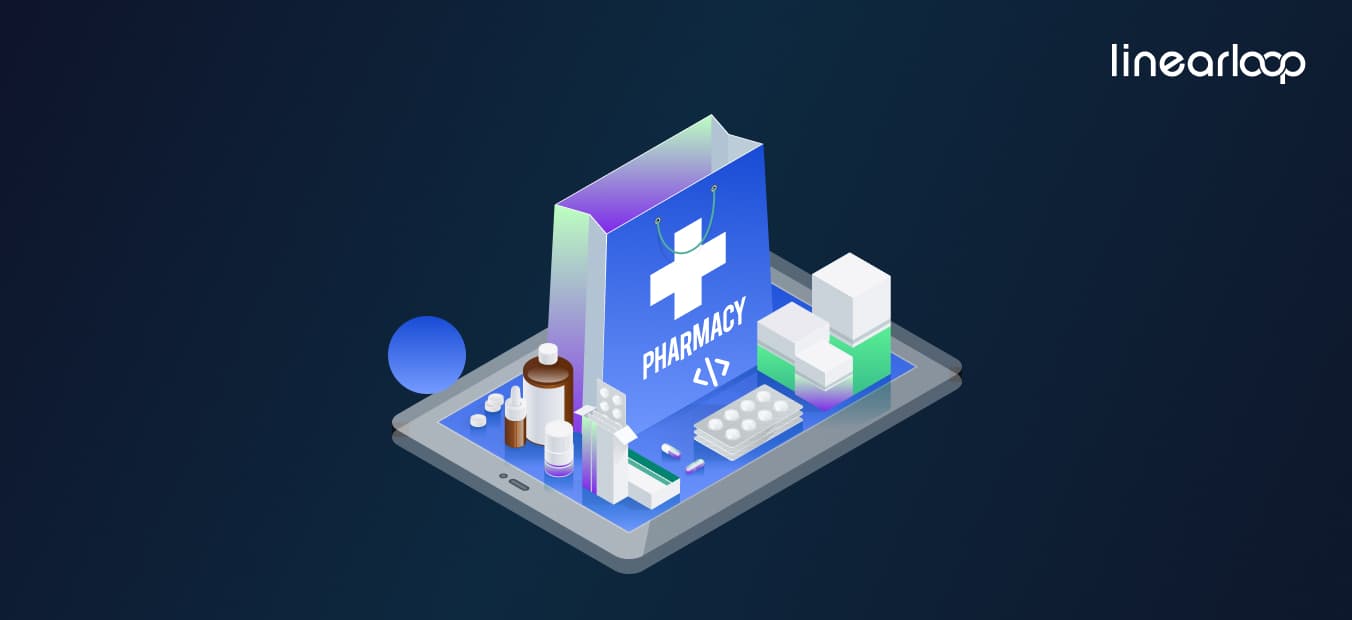
Pharmacy management software is essential for any pharmacy business. It helps manage inventory, sales, prescriptions, customers, and more, ensuring compliance with industry regulations and standards.
However, developing pharmacy management software is not child’s play. It requires a lot of planning, research, testing, and maintenance. You need to consider the needs and expectations of your customers, the features and functionalities of your software, your system's security and reliability, and your solution's scalability and performance.
In this blog post, we'll share tips and best practices for developing pharmacy management software that meets your business goals and satisfies your customers. We'll also explain how our company can assist you with your pharmacy management software development project.
The first step in developing pharmacy management software is to understand your customers. Who are they? What are their pain points? What are their preferences? How do they interact with your software?
You can use various methods to gather customer feedback, such as surveys, interviews, focus groups, or user testing. You can also analyze the data from your existing software, such as usage patterns, error reports, or customer reviews.
Understanding your customers allows you to identify their pain points, the solutions they need, and the value they expect from your software.
You can also segment your customers into different groups based on their characteristics, behaviors, or needs. This will help you tailor your software to each customer segment and deliver a personalized experience.
Also read: Understanding Your Target Audience: A Key to Product Success
The next step in developing pharmacy management software is to define your features and functionalities. What are the core functions of your software? What are the additional features that can enhance your software? How will your features and functionalities benefit your customers?
You can use various tools to define your features and functionalities, such as user stories, use cases, wireframes, or prototypes. You can prioritize features and functionalities by importance, urgency, or feasibility. Focus on the most valuable and viable aspects of your software, avoiding unnecessary or irrelevant features.
Some of the common features and functionalities of a pharmacy management software are:
This feature allows you to track and manage your stock levels, expiry dates, reorder points, and suppliers. It also helps you optimize your inventory costs, reduce wastage, and prevent stock-outs.
This feature allows you to process and record your sales transactions, generate invoices and receipts, and accept payments. It also helps you monitor your sales performance, analyze your sales trends, and increase your revenue.
This feature allows you to manage and verify your prescriptions, check for drug interactions and allergies, and dispense medications. It also helps you comply with the legal and ethical requirements of the industry, such as HIPAA, FDA, or DEA.
This feature allows you to manage and communicate with your customers, store and update their information, and offer loyalty programs and discounts. It also helps you improve your customer satisfaction, retention, and loyalty.
This feature allows you to generate and view various reports and dashboards, such as inventory reports, sales reports, prescription reports, or customer reports. It also helps you gain insights and make data-driven decisions for your business.
The third step in developing pharmacy management software is to choose your technology stack. What are the programming languages, frameworks, libraries, databases, or tools that you will use to build your software? How will you ensure the compatibility, security, and performance of your software?
You can use various criteria to choose your technology stack, such as your budget, timeline, expertise, or requirements. You can also research and compare the pros and cons of different technologies, such as their features, functionalities, scalability, reliability, or popularity.
Some of the common technologies used for pharmacy management software development are:
This is the part of your software that interacts with your customers. It includes the user interface, design, and functionality of your software. Some of the popular front-end technologies are HTML, CSS, JavaScript, React, Angular, or Bootstrap.
This is the part of your software that handles the logic, data, and communication of your software. It includes the server, database, and application of your software. Some of the popular back-end technologies are PHP, Python, Java, Node.js, MySQL, MongoDB, or Firebase.
This is the part of your software that runs on the Internet. It includes the hosting, storage, and services of your software. Some of the popular cloud technologies are AWS, Azure, Google Cloud, and Heroku.
Also read: Tips and Best Practices for Choosing a Tech Stack for MVP
The final step in developing a pharmacy management software is to test and deploy your software. How will you ensure the quality, functionality, and usability of your software? How will you deliver your software to your customers and maintain it?
You can use various methods to test and deploy your software, such as unit testing, integration testing, user acceptance testing, or beta testing. You can also use various tools to test and deploy your software, such as GitHub, Jenkins, Selenium, or Docker.
By testing and deploying your software, you can identify and fix any bugs, errors, or issues in your software. You can also ensure that your software meets your customers’ expectations and requirements. You can also update and improve your software based on the feedback and data you receive from your customers.
Also read: The Future of Psychology-Driven Design: Navigating Trends and Technologies
Developing a pharmacy management software is a complex and challenging process. It requires a lot of time, money, and expertise. It also involves a lot of risks, such as technical glitches, security breaches, or customer complaints.
That’s why you need a reliable and experienced partner to help you with your pharmacy management software development project. That’s where we come in.
We are a leading software development company specializing in pharmacy management software. Our skilled team of developers, designers, testers, and project managers ensures every aspect of your project is handled efficiently. We have a proven track record of delivering high-quality, cost-effective solutions.
We can help you with:
If you are interested in working with us, please contact us. We would love to hear from you and discuss your project in detail.
We hope you enjoyed this blog post and learned something new. Thank you for reading and have a great day!

Oil & Gas Custom Software Solutions with Complete Guide
The oil and gas industry is one of the most complex and competitive sectors in the world. It faces many challenges, such as volatile prices, environmental regulations, operational risks, and digital transformation. To survive and thrive in this dynamic environment, oil and gas companies need to adopt innovative and efficient solutions that can optimize their performance, reduce costs, and enhance safety.
One of the best ways to achieve these goals is to invest in custom software solutions that are tailored to your specific needs and challenges. Custom software solutions can help you streamline your workflows, automate your processes, improve your data management, and leverage the latest technologies, such as cloud, IoT, AI, and blockchain.
In this blog post, we will share some of the benefits of custom software solutions for the oil and gas industry, and how you can find the right partner to develop them for you.
Custom software solutions can offer many advantages for oil and gas companies, such as:
Custom software solutions can help you automate and optimize your core operations, such as exploration, production, refining, and distribution. By eliminating manual tasks, reducing errors, and enhancing collaboration, you can save time, money, and resources, and increase your output and quality.
Custom software solutions can help you collect, store, and analyze your data from various sources, such as sensors, drones, satellites, and geospatial systems. By using advanced analytics and visualization tools, you can gain valuable insights into your assets, operations, and markets, and make informed decisions that can boost your performance and profitability.
Custom software solutions can help you monitor and control your assets, equipment, and personnel, and detect and prevent any potential hazards, such as leaks, spills, fires, or cyberattacks. By using features such as encryption, authentication, and backup, you can protect your data and systems from unauthorized access and loss, and comply with the relevant regulations and standards.
Custom software solutions can help you adapt to the changing needs and demands of your customers, partners, and regulators, and respond to the emerging opportunities and threats in the market. By using cloud-based and modular solutions, you can easily add, modify, or remove features and functionalities, and scale up or down your capacity and performance, without compromising your quality or security.
Also read: How to Find and Evaluate Potential Offshore Software Partners?
Custom software solutions can offer many benefits for oil and gas companies, but they also require a lot of expertise, experience, and resources to develop and maintain. That’s why you need to find a reliable and reputable partner who can understand your challenges and goals, and deliver high-quality and cost-effective solutions that meet your expectations and requirements.
Here are some tips on how to find the right partner to build robust oil and gas custom software solutions:
You need a partner who knows the ins and outs of your industry, and who can provide you with solutions that are relevant, compliant, and compatible with your existing systems and processes. You also need a partner who can keep up with the latest trends and technologies in the oil and gas sector, and who can offer you innovative and cutting-edge solutions that can give you a competitive edge.
You need a partner who has a history of delivering high-quality and timely solutions for oil and gas clients, and who can show you examples of their previous work and results. You also need a partner who has positive feedback and testimonials from their customers, and who can provide you with references and case studies that demonstrate their capabilities and achievements.
You need a partner who can communicate and collaborate with you effectively, and who can involve you in every stage of the development process, from planning and design, to testing and deployment. You also need a partner who can provide you with clear and detailed estimates, timelines, and reports, and who can keep you updated and informed on the progress and status of your project.
You need a partner who can adapt to your changing needs and preferences, and who can deliver solutions that are customized and personalized to your specific challenges and goals. You also need a partner who can work with you in an agile and iterative manner, and who can deliver solutions that are tested and validated, and that can be easily modified and improved based on your feedback and input.
Also read: How to Find a Software Development Partner?
If you are looking for a partner who can offer you all the benefits and features mentioned above, then you have come to the right place. We are a leading custom software development company that specializes in providing solutions for the oil and gas industry. We have a team of experts who have extensive experience and knowledge in the oil and gas sector, and who can provide you with solutions that are tailored to your specific needs and challenges.
We have a portfolio of successful projects that we have completed for oil and gas clients, and we can show you how we have helped them achieve their objectives and overcome their difficulties. We have a transparent and collaborative approach that ensures your satisfaction and involvement, and we have a flexible and agile methodology that ensures your solutions are delivered on time and on budget.
We are committed to providing you with solutions that are innovative, efficient, and secure, and that can help you optimize your performance, reduce your costs, and enhance your safety. We are also committed to providing you with solutions that are scalable and adaptable, and that can help you grow and succeed in the dynamic and competitive oil and gas market.
If you are interested in working with us, please contact us and let us know your challenges and goals. We will be happy to discuss your project with you and provide you with a free consultation and quote.
We look forward to hearing from you and working with you soon. 😊

Mayank Patel
Sep 3, 20244 min read
Custom ERP Software Development - Step-by-Step Guide 2024
If you’re a tech company leader, you know how important it is to have an efficient and effective enterprise resource planning (ERP) system. ERP software helps you manage your business processes, such as accounting, inventory, human resources, customer relations, and more.
But not all ERP systems are created equal. Some are too generic, too expensive, or too complex for your specific needs. That’s why many tech companies opt for custom ERP software development, which allows them to tailor their ERP system to their unique requirements and goals.
So, how do you go about developing custom ERP software? What are the steps involved, and what are the challenges and benefits? In this blog post,
We'll guide you through the custom ERP software development process and share tips and best practices from our experience as a leading software development company.
The first step in custom ERP software development is to define your business needs and goals. What are the problems you want to solve, and what are the outcomes you want to achieve? What are the features and functions you need in your ERP system, and how will they benefit your business?
To answer these questions, conduct a thorough analysis of your current business processes, identify gaps and inefficiencies, and prioritize areas needing improvement. You also need to consider your budget, timeline, and resources, and set realistic and measurable objectives.
Some of the common business needs and goals that drive custom ERP software development are:
The next step in custom ERP software development is to choose your technology stack and architecture. This involves deciding on the programming languages, frameworks, tools, and platforms that you will use to build your ERP system, as well as the design and structure of your software components and modules.
Choosing your technology stack and architecture is a crucial decision, as it will affect the performance, security, reliability, and maintainability of your ERP system.
Your technology stack and architecture should be compatible with your existing systems and infrastructure, and future technologies and trends you may want to adopt.
Your technology stack and architecture should be able to handle the increasing volume and complexity of your data and transactions, and support your business growth and expansion.
Your technology stack and architecture should ensure the protection of your sensitive and confidential data, and comply with the relevant laws and regulations.
Your technology stack and architecture should allow you to customize and modify your ERP system according to your changing business needs and preferences.
Your technology stack and architecture should fit your budget and provide a good return on investment.
Java is a widely used programming language that offers high performance, portability, and security. Java is suitable for building complex and large-scale ERP systems that run on multiple platforms and devices.
.NET is a framework that supports multiple programming languages, such as C#, VB.NET, and F#. .NET is ideal for developing ERP systems that integrate with Microsoft products and services, such as Azure, Office 365, and Dynamics 365.
PHP is a scripting language that is easy to learn and use. PHP is perfect for creating ERP systems that are web-based and dynamic, and that interact with databases and web servers.
Python is a high-level programming language that is simple and expressive. Python is great for developing ERP systems that require data analysis, machine learning, and artificial intelligence.
Microservices is an architectural style that divides an ERP system into small and independent modules that communicate with each other through APIs. Microservices is advantageous for building ERP systems that are scalable, resilient, and adaptable.
Monolithic is an architectural style that combines an ERP system into a single and cohesive unit that runs on a single server. Monolithic is beneficial for developing ERP systems that are simple, stable, and easy to deploy.
Also read: How you can build your own CDN through Baremetal Server for your startup
The third step in custom ERP software development is to design your user interface and user experience. This involves creating the visual and interactive elements of your ERP system, such as the layout, colors, fonts, icons, buttons, menus, forms, charts, and graphs.
Designing your user interface and user experience is an important step, as it will affect the usability, functionality, and satisfaction of your ERP system.
Your user interface and user experience should be simple and intuitive, and avoid unnecessary clutter and complexity.
Your user interface and user experience should be consistent and coherent, and follow the same design principles and standards throughout your ERP system.
Your user interface and user experience should be responsive and adaptive, and work well on different devices and screen sizes.
Your user interface and user experience should be accessible and inclusive, and cater to the diverse needs and preferences of your users.
Your user interface and user experience should be aesthetically pleasing and appealing, and reflect your brand identity and values.
Wireframes are low-fidelity sketches that show the basic structure and layout of your ERP system. Wireframes help you to plan and organize your content and features, and test your ideas and assumptions.
Mockups are high-fidelity images that show the appearance and style of your ERP system. Mockups help you to visualize and refine your design choices, and communicate your vision and expectations.
Prototypes are interactive models that simulate the functionality and behavior of your ERP system. Prototypes help you to evaluate and improve your user interface and user experience, and collect feedback and suggestions.
User testing is a process of involving real users in testing your ERP system. User testing helps you to identify and fix any issues and errors, and measure and optimize your user satisfaction and loyalty.
Also read: Future of Psychology-Driven Design: Trends and Technologies
The fourth step in custom ERP software development is to develop your software code and database. This involves writing the code that implements the logic and functionality of your ERP system, and creating the database that stores and manages your data.
Developing your software code and database is a critical step, as it will determine the quality and reliability of your ERP system.
Your software code and database should be modular, organized, and follow the principle of separation of concerns. This means that each module should have a single and clear responsibility, and be loosely coupled with other modules.
Your software code and database should be well-documented and commented, and follow the naming conventions and coding styles of your chosen technology stack. This will make your code and database easier to read, understand, and maintain.
Your software code and database should be thoroughly tested and verified, and follow the testing methodologies and techniques of your chosen technology stack. This will ensure that your code and database are free of bugs and errors, and meet the specifications and requirements.
Your software code and database should be regularly debugged and monitored, and follow the debugging tools and processes of your chosen technology stack. This will help you to detect and resolve any issues and problems, and improve the performance and security of your code and database.
The fifth and final step in custom ERP software development is to deploy your software and launch your ERP system. This involves transferring your software code and database from your development environment to your production environment, and making your ERP system available and accessible to your users.
Deploying your software and launching your ERP system is a crucial step, as it will mark the completion and delivery of your ERP project. You need to ensure a smooth and successful deployment and launch, following the strategies and procedures of your chosen technology stack and architecture.
Cloud is a method of deploying and launching your ERP system on a remote server that is hosted and managed by a third-party provider, such as Amazon Web Services, Microsoft Azure, or Google Cloud Platform. Cloud is convenient and cost-effective, as it eliminates the need for you to own and maintain your own server and infrastructure, and provides you with scalability, security, and reliability.
On-premise is a method of deploying and launching your ERP system on your own server and infrastructure, which are located and controlled by you. On-premise is advantageous and secure, as it gives you full ownership and customization of your ERP system, and ensures that your data and transactions are not shared with anyone else.
Hybrid is a method of deploying and launching your ERP system that combines both cloud and on-premise solutions, depending on your business needs and preferences. Hybrid is flexible and optimal, as it allows you to leverage the benefits of both cloud and on-premise, and balance the trade-offs between them.
Also read: Why We Care to Solve Problems Rather than Just Developing Product
Custom ERP software development is a complex and challenging process, but also a rewarding and beneficial one. By following the steps and tips shared in this blog post, you can create a custom ERP system that meets your business needs and goals, giving you a competitive edge in the market.
However, custom ERP software development is not a one-time project, but an ongoing journey. You need to constantly monitor, update, and improve your ERP system, and adapt to the changing business environment and customer expectations.
That’s why you need a reliable and experienced software development partner who can help you with your custom ERP software development, from start to finish, and beyond. A partner who can understand your vision and challenges, and provide you with the best solutions and services.
That’s where we come in.
We are a leading custom software product development company that specializes in custom ERP software development. We have a team of expert and passionate developers, designers, testers, and consultants, who can help you with every aspect of your ERP project, such as:
We have successfully delivered custom ERP software solutions to various tech companies across different industries and domains, such as:
We have helped them to streamline and automate their business processes, improve their data quality and accuracy, enhance their collaboration and communication, increase their productivity and profitability, reduce their costs and risks, support their growth and scalability, and meet their industry standards and regulations.
We can do the same for you.
If you’re interested in custom ERP software development, or want to learn more about our services and portfolio, please contact us. We’d love to discuss how we can help you achieve your business goals with custom ERP software.
Thank you for reading this blog post. We hope you found it useful and informative. We’d love to hear from you. 😊
Mayank Patel
Aug 8, 20245 min read