We're officially a Great Place To Work® certified company, India | 2026–27

Mayank Patel
Dec 3, 2025
8 min read
Last updated Jul 27, 2026
If you’ve been building products for a while, you’ve probably felt this quiet itch: Are we doing product engineering or just writing software? Somewhere along the way, that line blurred. And that blur is not harmless.
Both may look like twins on paper, but inside teams, they behave nothing alike. One hunts for what users truly care about; the other builds the machinery to bring those truths to life. When you mix them up, you steer in the wrong direction.
And here’s the uncomfortable bit: users don’t reward clean architectures; they reward products that make them feel understood. Software development can’t deliver that on its own. Product engineering can.
So before we unpack frameworks or compare responsibilities, it is worth asking the uncomfortable question:
What if the confusion between product engineering and software development is the very reason your product is not accelerating?
Because the distinction influences velocity, innovation, hiring, roadmaps, and ultimately, whether your product earns a place in the market or gets lost in it.
That is where we begin.
Product engineering is the entire journey of turning a problem into a product people actually use. It starts long before the first line of code and continues long after the first release.
Think of product engineering as a full-stack approach to product-building:
Research → Discovery → UX → Prototyping → Engineering → Testing → Launch → Measurement → Iteration → Scale.
It is outcome-driven, cross-functional and obsessed with user reality.
Great product engineering teams blend:
They do not ask, “How fast can we build this feature?”
They ask, “Should we build this at all?”
They care less about output and more about impact, activation rates, adoption curves, user behavior, friction points, retention signals. They test fast, learn fast, and treat the product as a living system, not a static roadmap.
Here is the simplest way to understand product engineering:
It is the discipline of reducing uncertainty about the market, the user needs, about what will stick and about where the opportunity truly lies.
Also Read: Oil & Gas Custom Software Solutions with Complete Guide
If product engineering is the art of deciding what to build and why it matters, software development is the craft of making it function securely, reliably, and at scale.
Software development is laser-focused on writing high-quality code that works. The scope is narrower, but the depth is substantial. It includes:
If product engineering is outcome-driven, software development is output-driven. Build the feature. Ship the release. Close the ticket. Improve system reliability.
Modern businesses would crumble without deep, stable engineering teams that know how to build scalable, robust systems.
Software developers optimize for:
Their world is measured in commits, test coverage, latency, throughput, CI/CD pipelines, and technical debt.
Even though software development is a crucial part of product engineering, it is not interchangeable with it. Product engineering lives in ambiguity and problem-finding, while software development lives in clarity and problem-solving.
Also Read: How to Develop a Pharmacy Management Software
| Dimension | Product Engineering | Software Development |
| Scope | Covers the full lifecycle: research, discovery, UX, prototyping, testing, launch, measurement, and iteration. | Focuses on building functional, scalable, high-quality software components. |
| Ownership | Owns user value, adoption, retention, and overall product success. | Owns correctness, performance, reliability, and system stability. |
| Decision-making | Driven by user insights, behavior data, and market signals. | Driven by technical feasibility, architecture choices, and engineering constraints. |
| Metrics | Optimizes for activation, engagement, retention, and product-market fit. | Optimizes for uptime, loading speed, error rates, security, and performance. |
| Skill Sets | Cross-disciplinary: PM thinking, UX awareness, analytics, and engineering. | Deep technical expertise: architecture, coding, testing, DevOps, and maintenance. |
| Mindset | Outcome-driven (value created). | Output-driven (features shipped). |
| Risk Focus | Mitigates risk of building the wrong product. | Mitigates risk of technical debt and system failures. |
| Workflow Style | Iterative, experiment-led, discovery-heavy. | Milestone-driven, structured, predictable execution. |
Understanding the difference between product engineering and software development requires more than a checklist. Below is a deeper look at each dimension, expanded to match the emotional and strategic richness of the original blog you liked.
Product engineering starts with the market — not assumptions, not stakeholder wish lists, not an internal idea of what “should” work. It begins with questions like:
It is exploratory by design. Product engineering thrives in ambiguity. It embraces discomfort because discomfort usually means you are uncovering truths that others have ignored. It prototypes, tests, listens, and adjusts. It assumes the team does not have the answer yet, but can find it.
Software development, meanwhile, begins when the problem space is already defined. It leans into clarity. It expects structured requirements, technical constraints, clear workflows, and measurable milestones. Engineers ask:
It is grounded in precision, predictability, and clean execution. Not because engineers lack creativity, but because building safe, stable systems requires strict mental models.
Both approaches are essential. Market-first thinking identifies opportunity, while engineering-first thinking operationalizes it.
Product engineering optimizes for one core outcome: making users care. It focuses on value creation, not feature creation. You will see product engineering teams asking things like:
Here, the primary KPI is not velocity or story points. it is whether behavior changes because of what you built.
On the contrary, software development optimizes for quality: clean codebases, stable systems, scalable architecture, consistent performance. Engineers look for correctness, reliability, and security. They are the guardians of the product’s long-term health, ensuring nothing breaks under real-world load.
One goal is emotional — does the user feel seen, understood, and empowered? The other is mechanical — does the system work flawlessly, every single time?
Great products require both. Value without quality collapses. Quality without value fades.
Product engineering teams operate like small, multi-disciplinary organisms. You will find:
Everyone participates in discovery, debates tradeoffs and contributes to insights. The team moves together because the problem belongs to all of them.
Software development teams are organized around depth. They bring specialized expertise to the table: backend engineers, frontend engineers, DevOps, SREs, QA testers. Their collaboration is rooted in technical excellence:
They execute with discipline because stability requires discipline.
Cross-functional teams explore possibilities. Engineering-centric teams refine realities. Modern organizations need both universes running in sync.
Product engineering follows a rhythm of continuous learning. It runs on loops, not lines:
Discovery → Prototype → Test → Measure → Iterate → Refine.
It assumes change is inevitable; not a disruption, but a signal. It adjusts direction based on user behavior. It welcomes pivots because pivots often reveal the breakthrough.
Software development follows a structured sequence:
Requirements → Architecture → Implementation → Testing → Deployment → Maintenance.
The process is linear because quality depends on predictability. Complex systems cannot operate on endless changes mid-build. Stability comes from respecting the path.
Iteration without structure becomes chaos. Structure without iteration becomes irrelevant. The real progress happens when both cycles support each other.
Product engineering manages the risk of building the wrong thing — a product with weak adoption, fuzzy value, or confusing UX. This is the silent killer of early and mid-stage companies. You can build fast, design beautifully, advertise aggressively. However, if users do not feel the value, nothing sticks.
Software development manages the risk of technical debt — slow systems, insecure flows, unscalable architecture, fragile codebases. This is the silent killer of scaling companies. You can have strong adoption, a compelling value proposition, and great product momentum. However, if the system collapses, growth collapses with it.
Product-market fit risk affects your ability to grow. Technical debt risk affects your ability to sustain growth.
Smart organizations treat both risks as equally urgent.
Also Read: Custom ERP Software Development - Step-by-Step Guide 2024
There are moments in a company’s life when code alone cannot save you. When what you need is more clarity about users, about problems, about opportunity.
You need product engineering when:
If your company is in exploration mode, product engineering is foundational.
Also Read: What Is Loop Engineering? The AI Shift Everyone Is Talking About
There are equally critical moments when experimentation must step aside for engineering depth.
You need strong software development when:
That is when you need engineers who can see the entire system, from front to back, past to future.
Every meaningful product story begins with a truth we tend to overlook: the deeper the human problem, the more product engineering matters. The experience of InnovAge shows that, while technology is necessary, a partnership with the right organization can take it to new heights. In this case, that partner was Linearloop.
InnovAge supports elderly residents across multiple care centres, including individuals who depend on telehealth, vital sign tracking, doctor consultations, and medication reminders to maintain their health and independence. The current digital experience was not designed for people who are not adept with technology.
InnovAge needed a digital experience that truly supported elderly residents through telehealth, vital sign tracking, and doctor consultations. Their existing system made basic tasks difficult.
Small buttons, unclear labels, and multi-step flows created friction for seniors who were already anxious about using technology. Care teams also struggled with scattered information and inconsistent data access, leading to low telehealth adoption and increased manual intervention.
The primary users were seniors with low digital literacy, limited mobility, and a need for simple, predictable workflows. Doctors and caregivers require quick, unified access to patient data without navigating complex interfaces.
Linearloop began by observing how seniors interacted with devices and identifying confusion points. Instead of adding features, the team redesigned the experience around accessibility and clarity. This included:
Only after establishing usability did the team introduce key functionality such as video consultations, vitals tracking, medication reminders, mood monitoring, and caregiver workflows. The goal was simple: make daily digital interactions easier and more independent for seniors.
Once Linearloop’s product engineering team defined the right solution, their engineering team turned it into reality with a scalable, high-performing system:
The implementation focused on ensuring that technical decisions supported the simplicity seniors needed.
The impact was both operational and deeply human:
With Linearloop, they engineered behavioral change and transformed scattered workflows into a unified experience that respected the limitations and the potential of every user involved.
In reality, product engineering and software development are two halves of the same engine. They’re absolutely inseparable if you want to build products that work and matter.
Product engineering begins the journey by asking the uncomfortable questions.
It translates market ambiguity into clarity, and clarity into direction. It shapes the narrative, prototypes the possibilities, tests assumptions, and defines the “why” with a level of depth that gives engineering something solid to work toward.
Software development takes that clarity and gives it structure. In this new construct, architects define the system as engineers create the Workflow. QA is preventing surprise in the system. The engineers are converting intentions to Infrastructure, or translating insight into Implementation. They take a delicate concept and create a durable product from it.
The real magic happens when these worlds overlap.
Let us clear up some myths that frequently derail teams:
Every organization eventually reaches a crossroads where the question shifts from “Can we build this?” to “Should we?” or from “What do users want?” to “How do we scale what we already know works?”
Choosing between product engineering and software development is about understanding where your company is in its journey and what kind of thinking will unlock the next stage of growth. Below is a deeper look at how to make that call with clarity instead of instinct.
Younger teams often carry more questions than answers. They are still navigating user preferences, validating market direction, and building their first cycles of trust with customers. In this stage, product engineering becomes essential because it reduces the risk of running quickly in the wrong direction. You need exploration, interviews, prototypes, tests, and a willingness to reshape ideas on the fly.
Mature teams, on the other hand, already have traction. They know their users well. Their problem is not “What should we build?” but “How do we build this safely, faster, and at scale?” That is when deep software development discipline becomes the driver - strong architecture, performance tuning, reliability, and long-term maintainability. Team maturity determines whether curiosity or craftsmanship needs to lead.
Your goals tell you which mindset should dominate, exploration or execution. When you are entering a new market, launching an MVP, or testing unfamiliar user behavior, product engineering gives you the flexibility to learn without overcommitting to a build that may not stick. It helps you generate insights before generating code.
But if your goal is to strengthen an already successful product (faster load times, stronger security, new integrations, smoother performance, or readiness for enterprise scale), then software development should take the wheel. Goals that hinge on stability and reliability cannot rely on experimentation alone. The right discipline aligns with the outcome you want, not the habit you are used to.
Short timelines do not always mean rushing into software development. Sometimes they mean you cannot afford to build the wrong thing. If your deadlines leave little room for failure or rework, product engineering will prevent missteps by validating direction early. It ensures your pace does not compromise relevance.
However, there are projects where timelines demand rigorous execution — platform rewrites, compliance work, performance upgrades, infrastructure changes. These require predictable milestones, not iterative uncertainty. When the window is tight and the work is technical, engineering depth becomes non-negotiable. Timelines reveal whether you need certainty of learning or certainty of delivery.
Markets are living organisms. Some move quickly, driven by trends, shifting behavior, or emerging competition. In these spaces, product engineering helps you stay agile, curious, and responsive. It lets you evolve with the market rather than freeze under pressure.
Other markets are stable and infrastructural. Here, customers measure trust in reliability, not novelty. Think of healthcare systems, fintech platforms, enterprise SaaS, supply chain products. In these categories, robust engineering matters more than rapid experimentation. When the market punishes outages more than it rewards feature innovation, software development leads. Understanding market velocity helps you choose the right operating rhythm.
The truth is, most modern organizations should not choose one discipline exclusively. The strongest teams blend both, letting product engineering guide direction while software development powers execution. Hybrid pods create this balance naturally: a PM to shape vision, a designer to craft experience, engineers to build, and data analysts to measure impact.
This model prevents the extremes, a product team chasing ideas without engineering constraints, or an engineering team building flawlessly without user insight. Hybrid structures create shared ownership, shared vocabulary, and shared accountability. They make sure that every decision considers both value and viability. When both disciplines sit at the same table, you get products that resonate emotionally and function reliably.
Also Read: Electric Vehicle Software Development: All You Need to Know
Here is the simple reality of building products today: Product engineering and software development are not two different worlds; they are two ways of caring about the same user. One helps you understand what people actually need. The other makes sure what you build is dependable, fast, and ready for real life.
Teams really hit their stride when they stop treating these disciplines as steps on a checklist and start treating them as a loop. You listen, you build, you learn, you adjust. And you keep going. That rhythm is what helps a product stay useful, stay relevant, and stay loved.
Great products grow the way people do, through curiosity, patience, and constant refinement. When your organization embraces both the heart and the craft of product-building, that is when real momentum begins.


Vibe Coding Workflow: How Senior Engineers Build Faster Without Chaos
Engineering teams are shipping faster than ever with AI-assisted development, but most workflows haven’t caught up. You still see over-documented plans, delayed execution, and rigid processes slowing down senior engineers. On the other side, moving fast often turns into messy, unstructured coding that creates long-term system debt. The real problem is the lack of a controlled way to move fast without breaking architectural integrity.
This is where a senior-level vibe coding workflow fits. It’s structured execution driven by intent, constraints, and experience. You move quickly, but every decision is anchored in systems thinking. This blog breaks down what that workflow actually looks like for architects and experienced engineers who need to build fast without losing control.
Read more: How BeatRoute Connects Brands, Distributors, and Retailers in One System
Vibe coding in engineering does not mean writing code without structure. It refers to executing quickly with minimal upfront formalisation while still operating within clear system intent. The difference is in control. At a junior level, improvisation often leads to fragmented logic and unstable systems. At a senior level, the same speed is guided by constraints, prior patterns, and an understanding of how systems behave under load and change.
This is best understood as controlled improvisation. Decisions are made in motion, but they are not arbitrary. A senior architect relies on experience to anticipate failure points, choose acceptable trade-offs, and keep the system adaptable. The architecture may not be fully documented upfront, but it exists implicitly in how components are shaped, connected, and evolved during execution.
Read more: Why Teams Optimize Conversion rate Instead of Revenue

Traditional engineering workflows are designed for predictability, not speed. At senior levels, this creates friction because decisions are delayed, execution is fragmented, and systems evolve slower than the problem space. The mismatch becomes visible in fast-moving environments where adaptability matters more than upfront completeness.
Read more: Why Some Lead Form Fields Kill Conversions
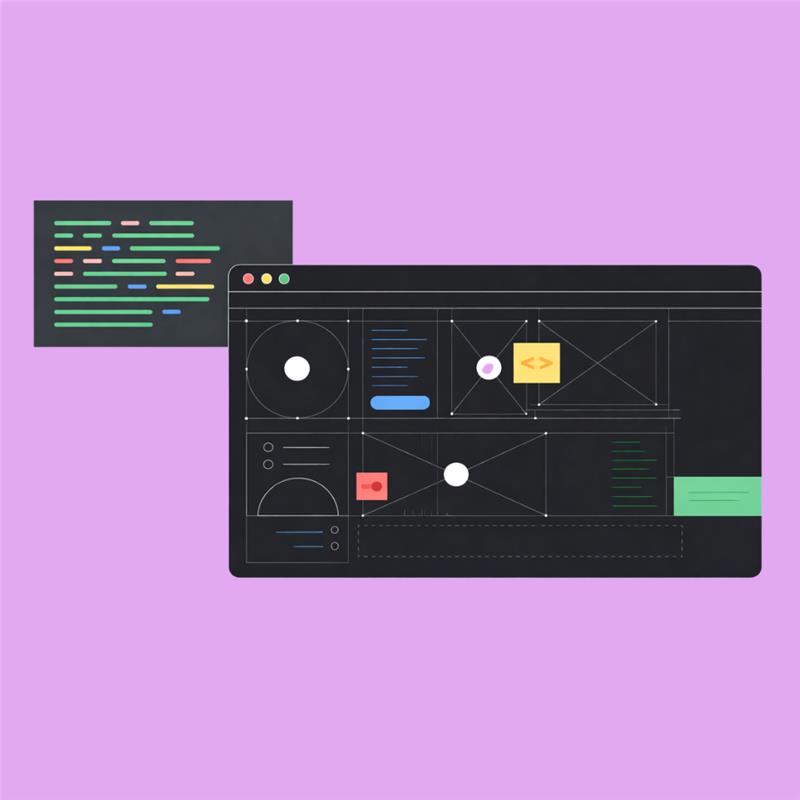
The vibe coding workflow operates as a structured system. It follows a clear sequence:
intent → risk → execution → refinement
where decisions are made in motion but remain anchored to system constraints. Each step builds on the previous one, ensuring speed does not compromise architectural control.
Senior architects begin with clarity on what the system must achieve. The focus is on defining boundaries that guide execution without slowing it down. This allows teams to move early while still aligning decisions with business goals, technical constraints, and expected system behaviour under real conditions.
Instead of investing time in detailed diagrams, architects sketch directions quickly. The goal is to understand system shape and dependencies without locking decisions prematurely. This approach surfaces unknowns early and enables flexibility, allowing the architecture to evolve naturally as more information becomes available during actual implementation and testing phases.
Execution begins with the most uncertain part of the system, not the easiest. This reduces the chances of late-stage failures. By validating risky components early, such as integrations or scaling constraints, architects ensure that the foundation is stable before expanding, preventing wasted effort on features built on unverified assumptions.
Rather than building isolated layers, the system is developed in thin, end-to-end slices. This ensures that every piece of work contributes to a functioning system. Early working flows provide faster feedback, reveal integration issues sooner, and help validate real-world usability before investing heavily in incomplete or disconnected modules.
Senior engineers optimise for speed by offloading repetitive work. AI tools, templates, and reusable patterns handle boilerplate, allowing focus on critical decisions. This shifts effort from writing code to shaping systems, ensuring that time is spent on architecture, trade-offs, and problem-solving rather than low-value implementation details.
Structure is not delayed to the end. Architects continuously reshape the system as it evolves, removing weak abstractions and improving clarity. This prevents technical debt from accumulating and keeps the system adaptable, ensuring that early decisions do not become constraints as complexity increases over time.
Decisions are validated through actual system behaviour, not assumptions. Testing with real data and realistic scenarios ensures that the system performs as expected. This reduces reliance on theoretical design and helps uncover issues that only appear under real conditions, leading to more reliable and scalable systems.
Once the system demonstrates working flows, structure is formalised. This includes refining abstractions, improving modularity, and standardising patterns. Delaying structure ensures that decisions are based on real insights rather than assumptions, resulting in a cleaner and more resilient architecture aligned with actual system behaviour.
Documentation focuses on what matters for future understanding and scalability. Instead of documenting everything, architects capture key decisions, trade-offs, and system boundaries. This keeps documentation concise and useful, ensuring that it supports decision-making without becoming a maintenance burden or slowing down development velocity.
Read more: From Custom Builds to 60 Stores: BVB Media eCommerce Platform Story
Vibe coding and traditional architecture workflows operate on fundamentally different execution models. One optimises for speed under uncertainty, the other for predictability under defined scope. The choice depends on system maturity, risk tolerance, and team structure.
| Parameter | Vibe coding workflow | Traditional architecture workflow |
| Speed of execution | High velocity with early system movement and rapid iteration cycles | Slower due to upfront planning, reviews, and phased execution |
| Risk handling | Risk-first approach; highest uncertainty components validated early | Risk deferred; critical issues often discovered later in execution |
| Documentation approach | Minimal, decision-focused documentation created during or after execution | Heavy upfront documentation before implementation begins |
| Adaptability to change | High; system evolves continuously based on real signals and feedback | Low to moderate; changes require rework across predefined plans |
| Feedback loops | Short and continuous; driven by working system behaviour | Long and delayed; dependent on phase completion and approvals |
| Team fit | Small, experienced teams with strong system intuition and ownership | Larger teams requiring alignment, coordination, and standardisation |
| Best use cases | 0→1 builds, high-uncertainty systems, fast-moving environments | Enterprise systems, regulated environments, multi-team dependencies |
| Failure impact | Failures surface early and are easier to correct | Failures surface late and are costlier to fix |
This workflow relies on experience. Senior engineers operate with built-in pattern recognition. They have seen similar system behaviours, failure modes, and scaling challenges before. This allows them to make fast decisions without losing control. Intuition is compressed knowledge applied in real time, guiding trade-offs, architecture choices, and execution flow.
When misapplied, the same approach breaks down quickly. Without experience, rapid execution turns into unstable systems, poor abstractions, and hidden technical debt. Failures are not anticipated, and refactoring becomes reactive instead of controlled. This is why vibe coding is an advanced execution model that depends on the ability to predict, absorb, and correct failure early.
Read more: How to Optimize Demo Request Flows Without Disrupting Sales Infrastructure
This workflow fits environments where speed and uncertainty dominate. Early-stage startups, 0→1 product builds, and ambiguous problem spaces benefit the most because requirements are incomplete and evolve during execution. In these scenarios, waiting for perfect clarity slows progress. A vibe coding approach allows teams to move early, validate assumptions quickly, and shape the system based on real feedback instead of static plans.
It is also effective in AI-driven development, where behaviour is probabilistic and cannot be fully specified upfront. For example, building an AI-powered recommendation engine, integrating third-party APIs with unpredictable responses, or launching a new SaaS feature with unknown usage patterns. In each case, rapid iteration with controlled adjustments enables faster convergence toward a working, scalable system.
Read more: Personalization vs Broad UX Changes in Conversion Rate Optimization Services
Vibe coding loses effectiveness in environments where predictability, coordination, and compliance outweigh speed. In such systems, uncontrolled iteration creates misalignment, audit risks, and integration failures.
Read more: Modern AI Data Stack Architecture Explained for Enterprises
Vibe coding is about executing with speed while maintaining invisible architectural discipline. The system may not look structured at the start, but every decision is anchored in constraints, trade-offs, and real-world validation. This is how senior engineers build quickly without compromising long-term stability or scalability.
If your team is trying to move faster without losing control, the problem is the execution model. At Linearloop, we design systems that allow high-velocity development without breaking architecture. Build fast, but build with intent, that is where real engineering leverage comes from.

Mayank Patel
Mar 19, 20266 min read

Product Engineering Guide: How Businesses Build Scalable Products
Most teams fail at building products because they treat product development as a sequence of features instead of a system. Product engineering fixes that gap. It brings engineering discipline into every product decision, from what you build first to how the system scales, evolves, and stays maintainable over time. Instead of shipping fast and fixing later, you design for reality: changing user behaviour, growing traffic, technical debt, and long-term cost.
If you’re building a SaaS product, an internal platform, or a customer-facing application, product engineering helps you move with clarity. You stop guessing. You start making trade-offs deliberately. This guide breaks down what product engineering really means, how it works step by step, and how you can apply it to build products that last.
Product engineering is the discipline of building a product as a long-lived system. It covers everything from architecture and development to testing, deployment, scaling, and continuous improvement across the product’s lifecycle.
At its core, product engineering connects three things that are often treated separately: how the system is built, how people use it, and how the business grows. The goal is to make sure every technical decision supports reliability, performance, and change over time.
Unlike isolated development efforts, product engineering focuses on:
This is why many businesses turn to product engineering services when they outgrow feature-driven development. Product engineering ensures early choices do not become long-term constraints, and that the product can evolve without constant rewrites or fragile workarounds.
Also Read: How to Work Agile in Product Engineering
Although the terms are often used interchangeably, product engineering and product development are fundamentally different in scope and intent.
The table below breaks down the difference clearly.
| Aspect | Product engineering | Product development |
| Core focus | Building a product as a scalable, long-term system | Delivering features to meet immediate requirements |
| Time horizon | Long-term product lifecycle and evolution | Short- to medium-term delivery goals |
| Decision-making | Architecture-first, with deliberate trade-offs | Feature-first, often driven by speed |
| Scalability | Designed into the system from the beginning | Addressed later, usually after issues appear |
| Maintainability | High priority, with clean, adaptable codebases | Often secondary to feature velocity |
| Business alignment | Engineering choices align with evolving business strategy | Alignment mainly at the feature or release level |
| Risk management | Anticipates technical debt, performance, and reliability risks early | Risks surface later as the product grows |
| Outcome | Products that scale, adapt, and remain stable over time | Products that ship quickly but may struggle to evolve |
Product engineering is never a single-team effort. It works only when decision-making and execution stay tightly connected across roles. Here’s who typically stays involved throughout the lifecycle:
As teams scale, many companies in the USA and India extend these roles through software product engineering services. This helps you access specialised expertise, move faster without overloading internal teams, and reduce operational friction.
Also Read: What Is Lean Product Engineering?A Practical Playbook for Architecture, Experiments, and Flow
The role of product engineering is to bridge business goals, user needs, and technology to build products that are scalable, reliable, and ready for long-term growth. It ensures that a product is not only developed correctly but also engineered to perform and evolve as the business scales.
Product engineering plays a critical role in defining product architecture, selecting the right technology stack, ensuring performance and security, and maintaining product quality throughout the lifecycle. It also supports continuous improvement by incorporating user feedback, optimizing performance, and enabling faster, safer releases.
By aligning engineering decisions with business strategy, product engineering helps organizations reduce risk, control costs, and deliver consistent value. This role becomes especially important for businesses leveraging product engineering services or outsourced software product engineering services to accelerate innovation in the USA and India.
Also Read: The Innovation-Ready Engineering Culture: A Practical Guide
A successful product engineering approach follows a structured lifecycle. Each phase builds on the previous one to ensure stability and growth.
This phase focuses on understanding business objectives, user needs, market opportunities, and technical feasibility. Clear requirements, priorities, and success criteria are defined here to reduce ambiguity later.
Design and architecture decisions are made with long-term scalability in mind. UX/UI design, system architecture, and technology stack selection are aligned with business goals and future growth plans.
Using agile methodologies, engineering teams build features incrementally. Continuous integration, code reviews, and best practices ensure quality, performance, and maintainability.
Quality is validated through functional, performance, and security testing. Automation plays a key role in supporting rapid releases without compromising reliability.
Products are deployed using DevOps practices that support frequent updates, high availability, and scalability. Cloud-native infrastructure enables efficient growth.
Post-launch, the product is monitored, optimized, and enhanced based on real-world usage, feedback, and evolving business needs.
Software product engineering services cover the full product lifecycle, from idea to scale. They bring engineering, design, quality, DevOps, and product thinking into a single system, rather than treating development as a handoff between teams.
These services typically span product discovery, architecture decisions, application development, testing, deployment, performance tuning, and continuous improvement. The focus is on building software that stays reliable, secure, and adaptable as usage and requirements change.
Many teams work with a software product engineering services company to move faster without accumulating technical debt. For businesses in the USA and India, outsourcing also helps you access specialised skills, shorten time-to-market, and control costs without compromising engineering quality.
Done right, software product engineering services turn product ideas into systems that can evolve, scale, and support long-term growth.
A good product engineering strategy shows up in outcomes. It changes how quickly you ship, how confidently you scale, and how much effort you spend fixing yesterday’s decisions. When engineering and product thinking stay aligned, the business feels the difference early and for longer.
Scalability is one of the most critical challenges businesses face as they grow. Without proper engineering foundations, products often struggle under increased users, data volumes, and feature complexity.
Product engineering addresses scalability through:
Many organizations leverage outsourced software product engineering services in India and the USA to scale efficiently while maintaining quality, speed, and reliability.
Product engineering breaks down when the structure is missing. Even capable teams run into friction when decisions are reactive, ownership is unclear, or systems are built without a long-term view.
Here are the challenges teams face most often, and how you can address them:
What you measure in product engineering shapes how teams behave. The right metrics balance delivery, quality, reliability, and long-term health. Instead of vanity numbers, you need signals that tell you whether the system is improving or quietly accumulating risk.
These metrics help you track progress without losing sight of engineering reality.
| Metric / KPI | What it tells you |
| Lead time for changes | How long it takes for a code change to move from commit to production. Shorter, stable lead times indicate efficient pipelines and healthy delivery practices. |
| Deployment frequency | How often you release updates. Higher frequency, when paired with stability, signals confidence in your architecture and release process. |
| Change failure rate | The percentage of releases that cause issues in production. A rising rate highlights gaps in testing, review, or system design. |
| Mean time to recovery (MTTR) | How quickly your team restores service after an incident. Faster recovery reflects good observability, ownership, and incident response processes. |
| System scalability metrics | How performance holds up as users, data, or load increase. This exposes architectural limits before they impact customers. |
| Technical debt ratio | The balance between new feature work and maintenance or refactoring. A growing ratio signals future slowdown if left unaddressed. |
| Defect escape rate | How many bugs reach production. This shows whether quality is being built into the system or patched later. |
| Infrastructure cost efficiency | How infrastructure spend scales with usage. Efficient systems grow cost in proportion to value, not complexity. |
Businesses should consider investing in software product engineering services when:
Early investment in digital product engineering services prevents costly rebuilds and enables smoother scaling.
Product engineering is a strategic capability that directly influences long-term business success. Organizations that invest in the right product engineering services, whether in-house or through outsourced software product engineering services, are better positioned to build products that scale, perform reliably, and evolve with the market.
As a leading product engineering services company in India and the USA, Linearloop partners with businesses to deliver end-to-end software product engineering services and solutions. By combining deep technical expertise with a strong understanding of business outcomes, Linearloop helps organizations design, build, and scale future-ready digital products that drive sustainable growth.
Mayank Patel
Jan 15, 20268 min read