We're officially a Great Place To Work® certified company, India | 2026–27

Mayank Patel
Dec 15, 2025
6 min read
Last updated Dec 15, 2025
Most engineering teams ship often. What they cannot always explain is why delivery feels unpredictable or why customer issues keep looping back. That gap usually has everything to do with what the team measures.
After all, engineering visibility decides engineering performance.
Yet many teams still track whatever is easiest to export from Jira or Git. They look neat on dashboards but tell you almost nothing about product speed, release stability, or how users experience your work.
Product engineering metrics fix that. They reveal how work actually flows, where cycles slow down, where quality leaks begin, and whether what you ship creates real value.
In this guide, we focus on the metrics that matter. The ones that move velocity, reliability, and customer outcomes. Let us get into them.
Also Read: What Is Lean Product Engineering?A Practical Playbook for Architecture, Experiments, and Flow
If you have ever looked at an engineering dashboard and felt unsure about what actually matters, this model solves that. High-performing teams track a balanced set across four layers that map directly to product outcomes.
Here is the breakdown:
This is the pulse of your engineering engine. Delivery metrics show how quickly work moves from idea to production, where handoffs slow things down, and how predictable your release cycles really are. When delivery is unstable, everything upstream and downstream feels chaotic.
Shipping fast doesn’t work if every deployment creates new fire drills. Quality metrics expose hidden instability, such as defects escaping to users, flaky pipelines, rising failure rates, and reactive fixes that drain capacity. They protect your team from a speed-at-all-costs mindset.
This is where engineering and product finally meet. Value metrics show whether features are adopted, whether customers activate quickly, and whether retention improves after a release.
Context switching, cognitive load, morale dips, and burnout indicators shape everything from delivery speed to defect rates. Healthy teams ship predictably. Stretched teams create accidental complexity, slowdowns, and rework.
Also Read: Product Engineering vs. Traditional Software Development: Which One Do You Need?
If delivery feels slow or inconsistent, the issue rarely starts with engineering effort. It usually starts with what you are not measuring. Delivery performance metrics reveal how work truly moves through your system, where it flows, where it stalls, and where small delays quietly compound.
Here are the metrics that give you real clarity:
How often you ship says a lot about how confidently your team works. Frequent, small releases reduce risk, shorten feedback loops, and make product decisions faster. Long gaps between deployments usually signal bottlenecks.
This is the time from code commit to production. It shows how quickly ideas turn into reality. A rising lead time almost always uncovers hidden friction, such as waiting for reviewers, QA, or deploy windows. When lead time drops, predictability rises.
Instead of tracking cycle time as a single number, break it down into stages: Coding, PR review, testing, and deployment. That breakdown exposes the exact stage causing delays. Most teams discover that their slowest stage is PR review or test environments.
High WIP is an early warning sign. It means the team is juggling too much, context switching increases, and delivery slows even when everyone is working hard. Setting limits forces focus and pulls work across the finish line faster.
Big PRs slow down reviewers, create risk, and lead to long back-and-forth cycles. Tracking PR size and review time together shows whether your release flow is smooth or constantly clogged.
Also Read: Building a B2B Marketplace: Complete Blueprint for Scale, Trust, and Liquidity
Fast delivery is useful only if your releases stay stable in the real world. Reliability metrics show how often things break, how long issues linger, and how much user trust you lose along the way. Most teams struggle with rework.
Here are the signals that surface hidden instability early:
This tells you how many deployments result in incidents, bugs, or rollbacks. A rising failure rate usually means rushed reviews, incomplete testing, or unclear requirements. A healthy rate shows your pipeline can handle fast iteration without breaking under pressure.
Bugs happen. The real question is how quickly your team recovers. MTTR shows the maturity of your incident response, alerting, and rollback processes. High MTTR means slow detection or unclear ownership, both of which cost users time and trust.
Defect density reveals code quality before release. Escaped defects reveal quality after release. When both trend upward, teams end up spending more time fixing than building. Tracking these together shows whether your QA process is preventing issues or simply catching them late.
Coverage alone does not guarantee quality, but low coverage guarantees risk. Pairing it with the pass rate shows whether your tests actually protect the system. Flaky tests are a signal that your CI pipeline is draining engineering time instead of saving it.
Unstable builds slow reviews, merges, and deployments. Tracking stability highlights pipeline issues that quietly eat into developer hours and create release anxiety.
Also Read: The Innovation-Ready Engineering Culture: A Practical Guide
Shipping faster is useful, and shipping stable releases is essential. But neither matters if customers do not use what you build. Product value metrics connect engineering effort to actual outcomes. They show whether your work moves the needle or just adds noise.
Here are the signals that matter most:
Adoption shows whether users notice a feature and whether they find it valuable. Low adoption often points to discoverability issues. Low activation usually signals unclear onboarding or an overcomplicated flow.
This metric cuts straight to product experience. The faster a user sees value, the higher the chances of retention. A rising time-to-value often reveals friction in onboarding, unnecessary steps, or gaps between expectation and reality.
Retention tells you if customers keep coming back. Stickiness tells you how often they engage. When these metrics drop, the issue is rarely engineering capacity. It is usually misaligned feature priorities or weak product-market fit signals.
These scores reveal sentiment long before churn appears. A dip in satisfaction often correlates with rising defects, slower delivery, or a new feature that doesn't meet expectations.
High-performing teams rely on tests. Tracking experiment velocity shows how quickly your product team learns and iterates. Slow learning cycles often lead to excessive engineering overhead for simple experiments.
Also Read: Modernize Your Ecommerce Product Listing for AI-Powered Search
Even the best delivery and quality metrics fall apart when the team behind them is stretched thin. Slowdowns, rising defects, and unpredictable releases often trace back to one root issue: an overloaded team. Team health metrics surface problems you cannot see in Jira.
Here are the indicators that matter:
When engineers juggle unclear requirements, noisy alerts, or too many tools, cognitive load spikes. That leads to slower delivery and more mistakes. Tracking DX signals, like time lost to setup, pipeline failures, or unclear specs, shows where frustration builds.
Flow efficiency reveals how much of a developer’s time is spent actually progressing work versus waiting. Low efficiency usually indicates bottlenecks in reviews, cross-team dependencies, or too many parallel tasks. High context switching is a silent productivity drain.
Simple surveys highlight morale dips early. A drop in satisfaction often aligns with rising WIP, unclear priorities, or too much reactive work. Healthy morale is a leading indicator of predictable delivery.
If maintenance consumes most of your capacity, roadmap delivery slows, technical debt grows, and engineering feels stuck. This ratio shows whether teams spend time building new value or patching old complexity.
Rising after-hours activity, longer PR cycles, skipped retros, or constant firefighting are burnout flags. Ignoring them eventually impacts quality, speed, and retention.
Also Read: New Product Development Process: An In-Depth Guide 2024
Early-stage founders chase speed. Scaling teams chase predictability, while enterprises chase stability and clarity across large systems. Choosing the wrong metrics for your stage creates noise. Here is a clearer way to approach it.
Your biggest advantage is agility. Metrics should help you reduce uncertainty, not build governance. Focus on:
If these move in the right direction, you are learning fast enough to find product-market fit.
As teams grow, coordination becomes the bottleneck. Delivery metrics matter as much as value metrics. Track:
Predictability becomes the key to shipping consistently without burning out teams.
Legacy systems, cross-team dependencies, and manual processes create friction. Metrics that expose bottlenecks and quality gaps matter most:
These metrics show whether transformation is actually improving system performance.
This is where most teams slip. Tracking 30 metrics creates dashboard fatigue. If a metric does not influence a decision or change behavior, drop it. A focused metric set beats a crowded one every time.
Most teams struggle with too many of them scattered across too many tools. When data lives in Jira, Git, CI, observability platforms, and spreadsheets, leaders end up with dashboards that look impressive but do not guide decisions.
Here is how teams simplify measurement.
Pull work data from Jira, code data from Git, and pipeline data from CI/CD into one view. When delivery, quality, and value signals sit together, patterns become obvious: Slow reviews, unstable builds, repeated handoffs.
If a dashboard exists only to “show activity,” it is noise. Keep metrics that influence prioritisation, staffing, or roadmap decisions. Drop anything you cannot act on. This alone removes half the clutter for most teams.
A metric without ownership becomes wallpaper. Assign each metric to someone responsible for interpreting it and driving action. Then, review the full metric set on a weekly, monthly, and quarterly rhythm. Check small loops for flow, and longer loops for strategy.
Delivery metrics should inform release plans. Reliability metrics should shape SLAs. Product value metrics should appear in quarterly reviews. When engineering data is incorporated into business conversations, alignment becomes automatic.
Even with the right intentions, teams slip into patterns that make metrics misleading or outright harmful. These traps create the illusion of progress while masking the real issues. Here are the mistakes worth avoiding.
Velocity looks actionable, but it rarely reflects true progress. Teams can inflate points, split tickets, or prioritise easy work to hit the number. Velocity should guide planning.
Metric-driven pressure on individuals creates fear. Delivery delays usually come from process friction, unclear requirements, or overloaded pipelines. Metrics should highlight system-level issues.
A dashboard packed with 40 signals does not improve execution. It hides the ones that matter. If a metric does not change decisions, it is not worth tracking. Focus beats volume every time.
Lagging metrics, like defect counts or churn, tell you what has already gone wrong. Leading indicators, such as review time, WIP levels, and activation rates, help you prevent problems before they become costly. Balanced teams track both.
Good teams measure output. Great teams measure what drives outcomes. Product engineering metrics give you exactly that: Clarity on speed, stability, value, and team sustainability. They show where work slows down, where quality slips, and where customer impact actually begins.
The shift starts with a small, focused set across the four layers you have seen: Delivery, reliability, product value, and team health. Track them consistently, review them with intent, and use them to guide decisions.
As you grow, these metrics become your alignment engine. They help founders, CTOs, PMs, and engineering leads operate from the same playbook, move faster with fewer assumptions, and build products that improve steadily.
If you want help setting up these systems, tightening delivery loops, or scaling your engineering capability, Linearloop partners with teams to build exactly that muscle.
Start small. Stay consistent. Let the right metrics shape how your team executes.


Vibe Coding Workflow: How Senior Engineers Build Faster Without Chaos
Engineering teams are shipping faster than ever with AI-assisted development, but most workflows haven’t caught up. You still see over-documented plans, delayed execution, and rigid processes slowing down senior engineers. On the other side, moving fast often turns into messy, unstructured coding that creates long-term system debt. The real problem is the lack of a controlled way to move fast without breaking architectural integrity.
This is where a senior-level vibe coding workflow fits. It’s structured execution driven by intent, constraints, and experience. You move quickly, but every decision is anchored in systems thinking. This blog breaks down what that workflow actually looks like for architects and experienced engineers who need to build fast without losing control.
Read more: How BeatRoute Connects Brands, Distributors, and Retailers in One System
Vibe coding in engineering does not mean writing code without structure. It refers to executing quickly with minimal upfront formalisation while still operating within clear system intent. The difference is in control. At a junior level, improvisation often leads to fragmented logic and unstable systems. At a senior level, the same speed is guided by constraints, prior patterns, and an understanding of how systems behave under load and change.
This is best understood as controlled improvisation. Decisions are made in motion, but they are not arbitrary. A senior architect relies on experience to anticipate failure points, choose acceptable trade-offs, and keep the system adaptable. The architecture may not be fully documented upfront, but it exists implicitly in how components are shaped, connected, and evolved during execution.
Read more: Why Teams Optimize Conversion rate Instead of Revenue

Traditional engineering workflows are designed for predictability, not speed. At senior levels, this creates friction because decisions are delayed, execution is fragmented, and systems evolve slower than the problem space. The mismatch becomes visible in fast-moving environments where adaptability matters more than upfront completeness.
Read more: Why Some Lead Form Fields Kill Conversions
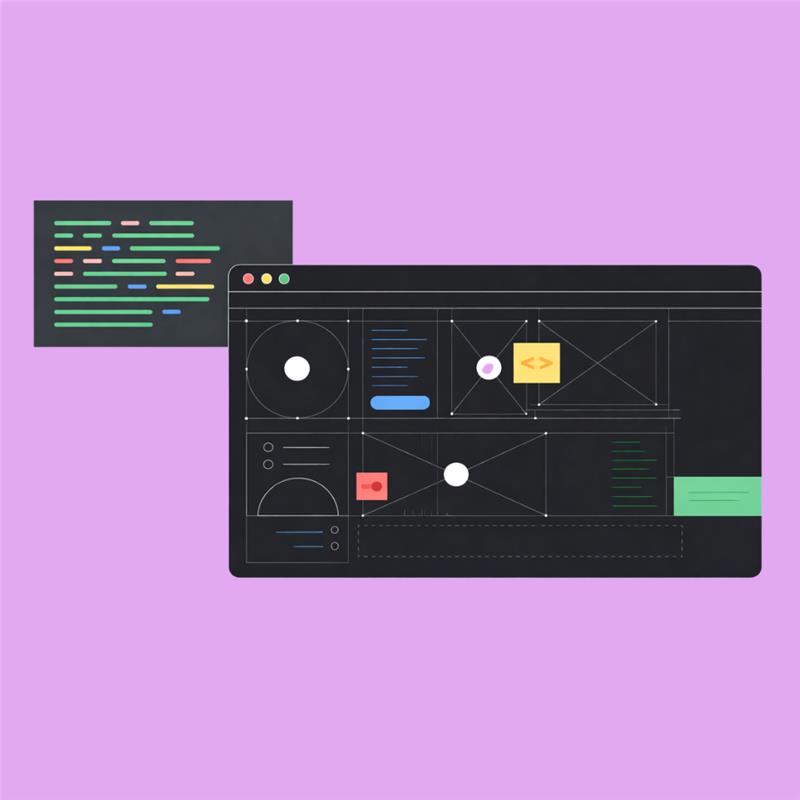
The vibe coding workflow operates as a structured system. It follows a clear sequence:
intent → risk → execution → refinement
where decisions are made in motion but remain anchored to system constraints. Each step builds on the previous one, ensuring speed does not compromise architectural control.
Senior architects begin with clarity on what the system must achieve. The focus is on defining boundaries that guide execution without slowing it down. This allows teams to move early while still aligning decisions with business goals, technical constraints, and expected system behaviour under real conditions.
Instead of investing time in detailed diagrams, architects sketch directions quickly. The goal is to understand system shape and dependencies without locking decisions prematurely. This approach surfaces unknowns early and enables flexibility, allowing the architecture to evolve naturally as more information becomes available during actual implementation and testing phases.
Execution begins with the most uncertain part of the system, not the easiest. This reduces the chances of late-stage failures. By validating risky components early, such as integrations or scaling constraints, architects ensure that the foundation is stable before expanding, preventing wasted effort on features built on unverified assumptions.
Rather than building isolated layers, the system is developed in thin, end-to-end slices. This ensures that every piece of work contributes to a functioning system. Early working flows provide faster feedback, reveal integration issues sooner, and help validate real-world usability before investing heavily in incomplete or disconnected modules.
Senior engineers optimise for speed by offloading repetitive work. AI tools, templates, and reusable patterns handle boilerplate, allowing focus on critical decisions. This shifts effort from writing code to shaping systems, ensuring that time is spent on architecture, trade-offs, and problem-solving rather than low-value implementation details.
Structure is not delayed to the end. Architects continuously reshape the system as it evolves, removing weak abstractions and improving clarity. This prevents technical debt from accumulating and keeps the system adaptable, ensuring that early decisions do not become constraints as complexity increases over time.
Decisions are validated through actual system behaviour, not assumptions. Testing with real data and realistic scenarios ensures that the system performs as expected. This reduces reliance on theoretical design and helps uncover issues that only appear under real conditions, leading to more reliable and scalable systems.
Once the system demonstrates working flows, structure is formalised. This includes refining abstractions, improving modularity, and standardising patterns. Delaying structure ensures that decisions are based on real insights rather than assumptions, resulting in a cleaner and more resilient architecture aligned with actual system behaviour.
Documentation focuses on what matters for future understanding and scalability. Instead of documenting everything, architects capture key decisions, trade-offs, and system boundaries. This keeps documentation concise and useful, ensuring that it supports decision-making without becoming a maintenance burden or slowing down development velocity.
Read more: From Custom Builds to 60 Stores: BVB Media eCommerce Platform Story
Vibe coding and traditional architecture workflows operate on fundamentally different execution models. One optimises for speed under uncertainty, the other for predictability under defined scope. The choice depends on system maturity, risk tolerance, and team structure.
| Parameter | Vibe coding workflow | Traditional architecture workflow |
| Speed of execution | High velocity with early system movement and rapid iteration cycles | Slower due to upfront planning, reviews, and phased execution |
| Risk handling | Risk-first approach; highest uncertainty components validated early | Risk deferred; critical issues often discovered later in execution |
| Documentation approach | Minimal, decision-focused documentation created during or after execution | Heavy upfront documentation before implementation begins |
| Adaptability to change | High; system evolves continuously based on real signals and feedback | Low to moderate; changes require rework across predefined plans |
| Feedback loops | Short and continuous; driven by working system behaviour | Long and delayed; dependent on phase completion and approvals |
| Team fit | Small, experienced teams with strong system intuition and ownership | Larger teams requiring alignment, coordination, and standardisation |
| Best use cases | 0→1 builds, high-uncertainty systems, fast-moving environments | Enterprise systems, regulated environments, multi-team dependencies |
| Failure impact | Failures surface early and are easier to correct | Failures surface late and are costlier to fix |
This workflow relies on experience. Senior engineers operate with built-in pattern recognition. They have seen similar system behaviours, failure modes, and scaling challenges before. This allows them to make fast decisions without losing control. Intuition is compressed knowledge applied in real time, guiding trade-offs, architecture choices, and execution flow.
When misapplied, the same approach breaks down quickly. Without experience, rapid execution turns into unstable systems, poor abstractions, and hidden technical debt. Failures are not anticipated, and refactoring becomes reactive instead of controlled. This is why vibe coding is an advanced execution model that depends on the ability to predict, absorb, and correct failure early.
Read more: How to Optimize Demo Request Flows Without Disrupting Sales Infrastructure
This workflow fits environments where speed and uncertainty dominate. Early-stage startups, 0→1 product builds, and ambiguous problem spaces benefit the most because requirements are incomplete and evolve during execution. In these scenarios, waiting for perfect clarity slows progress. A vibe coding approach allows teams to move early, validate assumptions quickly, and shape the system based on real feedback instead of static plans.
It is also effective in AI-driven development, where behaviour is probabilistic and cannot be fully specified upfront. For example, building an AI-powered recommendation engine, integrating third-party APIs with unpredictable responses, or launching a new SaaS feature with unknown usage patterns. In each case, rapid iteration with controlled adjustments enables faster convergence toward a working, scalable system.
Read more: Personalization vs Broad UX Changes in Conversion Rate Optimization Services
Vibe coding loses effectiveness in environments where predictability, coordination, and compliance outweigh speed. In such systems, uncontrolled iteration creates misalignment, audit risks, and integration failures.
Read more: Modern AI Data Stack Architecture Explained for Enterprises
Vibe coding is about executing with speed while maintaining invisible architectural discipline. The system may not look structured at the start, but every decision is anchored in constraints, trade-offs, and real-world validation. This is how senior engineers build quickly without compromising long-term stability or scalability.
If your team is trying to move faster without losing control, the problem is the execution model. At Linearloop, we design systems that allow high-velocity development without breaking architecture. Build fast, but build with intent, that is where real engineering leverage comes from.

Mayank Patel
Mar 19, 20266 min read

Product Engineering Guide: How Businesses Build Scalable Products
Most teams fail at building products because they treat product development as a sequence of features instead of a system. Product engineering fixes that gap. It brings engineering discipline into every product decision, from what you build first to how the system scales, evolves, and stays maintainable over time. Instead of shipping fast and fixing later, you design for reality: changing user behaviour, growing traffic, technical debt, and long-term cost.
If you’re building a SaaS product, an internal platform, or a customer-facing application, product engineering helps you move with clarity. You stop guessing. You start making trade-offs deliberately. This guide breaks down what product engineering really means, how it works step by step, and how you can apply it to build products that last.
Product engineering is the discipline of building a product as a long-lived system. It covers everything from architecture and development to testing, deployment, scaling, and continuous improvement across the product’s lifecycle.
At its core, product engineering connects three things that are often treated separately: how the system is built, how people use it, and how the business grows. The goal is to make sure every technical decision supports reliability, performance, and change over time.
Unlike isolated development efforts, product engineering focuses on:
This is why many businesses turn to product engineering services when they outgrow feature-driven development. Product engineering ensures early choices do not become long-term constraints, and that the product can evolve without constant rewrites or fragile workarounds.
Also Read: How to Work Agile in Product Engineering
Although the terms are often used interchangeably, product engineering and product development are fundamentally different in scope and intent.
The table below breaks down the difference clearly.
| Aspect | Product engineering | Product development |
| Core focus | Building a product as a scalable, long-term system | Delivering features to meet immediate requirements |
| Time horizon | Long-term product lifecycle and evolution | Short- to medium-term delivery goals |
| Decision-making | Architecture-first, with deliberate trade-offs | Feature-first, often driven by speed |
| Scalability | Designed into the system from the beginning | Addressed later, usually after issues appear |
| Maintainability | High priority, with clean, adaptable codebases | Often secondary to feature velocity |
| Business alignment | Engineering choices align with evolving business strategy | Alignment mainly at the feature or release level |
| Risk management | Anticipates technical debt, performance, and reliability risks early | Risks surface later as the product grows |
| Outcome | Products that scale, adapt, and remain stable over time | Products that ship quickly but may struggle to evolve |
Product engineering is never a single-team effort. It works only when decision-making and execution stay tightly connected across roles. Here’s who typically stays involved throughout the lifecycle:
As teams scale, many companies in the USA and India extend these roles through software product engineering services. This helps you access specialised expertise, move faster without overloading internal teams, and reduce operational friction.
Also Read: What Is Lean Product Engineering?A Practical Playbook for Architecture, Experiments, and Flow
The role of product engineering is to bridge business goals, user needs, and technology to build products that are scalable, reliable, and ready for long-term growth. It ensures that a product is not only developed correctly but also engineered to perform and evolve as the business scales.
Product engineering plays a critical role in defining product architecture, selecting the right technology stack, ensuring performance and security, and maintaining product quality throughout the lifecycle. It also supports continuous improvement by incorporating user feedback, optimizing performance, and enabling faster, safer releases.
By aligning engineering decisions with business strategy, product engineering helps organizations reduce risk, control costs, and deliver consistent value. This role becomes especially important for businesses leveraging product engineering services or outsourced software product engineering services to accelerate innovation in the USA and India.
Also Read: The Innovation-Ready Engineering Culture: A Practical Guide
A successful product engineering approach follows a structured lifecycle. Each phase builds on the previous one to ensure stability and growth.
This phase focuses on understanding business objectives, user needs, market opportunities, and technical feasibility. Clear requirements, priorities, and success criteria are defined here to reduce ambiguity later.
Design and architecture decisions are made with long-term scalability in mind. UX/UI design, system architecture, and technology stack selection are aligned with business goals and future growth plans.
Using agile methodologies, engineering teams build features incrementally. Continuous integration, code reviews, and best practices ensure quality, performance, and maintainability.
Quality is validated through functional, performance, and security testing. Automation plays a key role in supporting rapid releases without compromising reliability.
Products are deployed using DevOps practices that support frequent updates, high availability, and scalability. Cloud-native infrastructure enables efficient growth.
Post-launch, the product is monitored, optimized, and enhanced based on real-world usage, feedback, and evolving business needs.
Software product engineering services cover the full product lifecycle, from idea to scale. They bring engineering, design, quality, DevOps, and product thinking into a single system, rather than treating development as a handoff between teams.
These services typically span product discovery, architecture decisions, application development, testing, deployment, performance tuning, and continuous improvement. The focus is on building software that stays reliable, secure, and adaptable as usage and requirements change.
Many teams work with a software product engineering services company to move faster without accumulating technical debt. For businesses in the USA and India, outsourcing also helps you access specialised skills, shorten time-to-market, and control costs without compromising engineering quality.
Done right, software product engineering services turn product ideas into systems that can evolve, scale, and support long-term growth.
A good product engineering strategy shows up in outcomes. It changes how quickly you ship, how confidently you scale, and how much effort you spend fixing yesterday’s decisions. When engineering and product thinking stay aligned, the business feels the difference early and for longer.
Scalability is one of the most critical challenges businesses face as they grow. Without proper engineering foundations, products often struggle under increased users, data volumes, and feature complexity.
Product engineering addresses scalability through:
Many organizations leverage outsourced software product engineering services in India and the USA to scale efficiently while maintaining quality, speed, and reliability.
Product engineering breaks down when the structure is missing. Even capable teams run into friction when decisions are reactive, ownership is unclear, or systems are built without a long-term view.
Here are the challenges teams face most often, and how you can address them:
What you measure in product engineering shapes how teams behave. The right metrics balance delivery, quality, reliability, and long-term health. Instead of vanity numbers, you need signals that tell you whether the system is improving or quietly accumulating risk.
These metrics help you track progress without losing sight of engineering reality.
| Metric / KPI | What it tells you |
| Lead time for changes | How long it takes for a code change to move from commit to production. Shorter, stable lead times indicate efficient pipelines and healthy delivery practices. |
| Deployment frequency | How often you release updates. Higher frequency, when paired with stability, signals confidence in your architecture and release process. |
| Change failure rate | The percentage of releases that cause issues in production. A rising rate highlights gaps in testing, review, or system design. |
| Mean time to recovery (MTTR) | How quickly your team restores service after an incident. Faster recovery reflects good observability, ownership, and incident response processes. |
| System scalability metrics | How performance holds up as users, data, or load increase. This exposes architectural limits before they impact customers. |
| Technical debt ratio | The balance between new feature work and maintenance or refactoring. A growing ratio signals future slowdown if left unaddressed. |
| Defect escape rate | How many bugs reach production. This shows whether quality is being built into the system or patched later. |
| Infrastructure cost efficiency | How infrastructure spend scales with usage. Efficient systems grow cost in proportion to value, not complexity. |
Businesses should consider investing in software product engineering services when:
Early investment in digital product engineering services prevents costly rebuilds and enables smoother scaling.
Product engineering is a strategic capability that directly influences long-term business success. Organizations that invest in the right product engineering services, whether in-house or through outsourced software product engineering services, are better positioned to build products that scale, perform reliably, and evolve with the market.
As a leading product engineering services company in India and the USA, Linearloop partners with businesses to deliver end-to-end software product engineering services and solutions. By combining deep technical expertise with a strong understanding of business outcomes, Linearloop helps organizations design, build, and scale future-ready digital products that drive sustainable growth.
Mayank Patel
Jan 15, 20268 min read