We're officially a Great Place To Work® certified company, India | 2026–27

Mayank Patel
Sep 9, 2024
5 min read
Last updated Apr 14, 2025
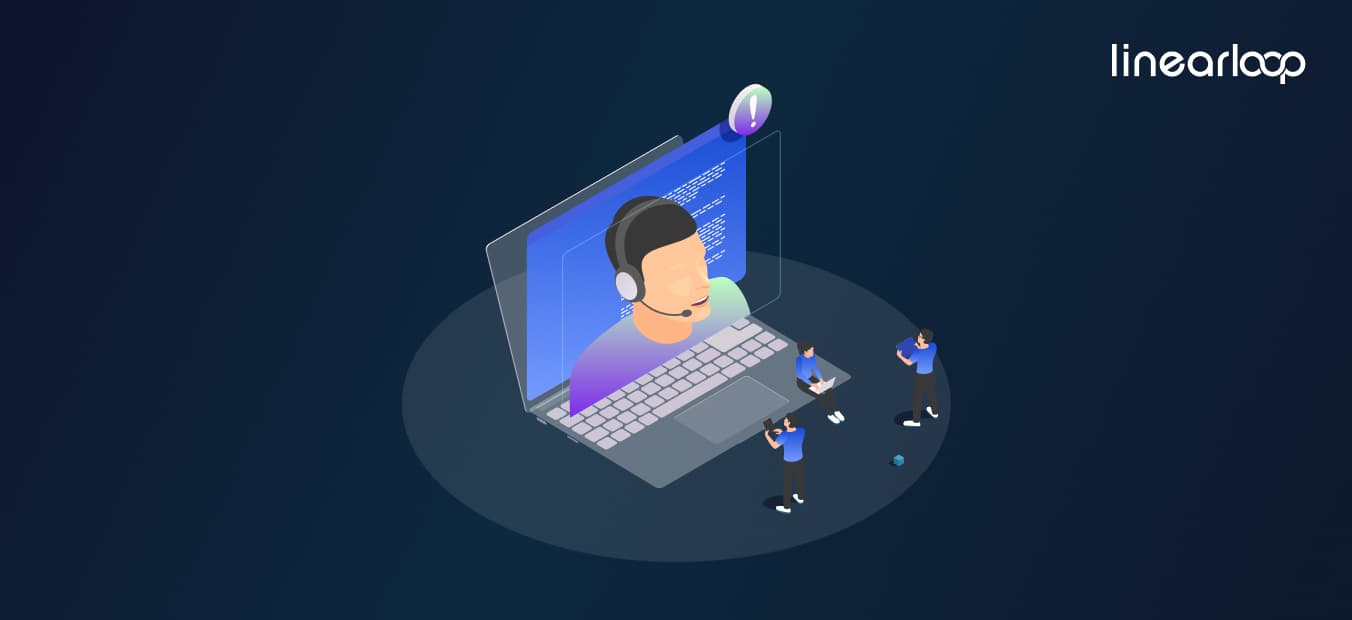
Ever felt like you're drowning in a sea of information? Well, you're not alone. Let me tell you about TechCorp, this cool tech company that was riding the innovation wave but hit a big snag with their customer support. They had so many awesome products, but keeping their support team up to speed? Nightmare city.
Enter RAG – no, not the cloth kind, but Retrieval-Augmented Generation. It's this super smart AI that's like having a genius librarian and a creative writer rolled into one. TechCorp decided to give RAG a shot, hoping it would help them swim through their ocean of product info and customer questions.
Spoiler alert: it did way more than just keep them afloat. Stick around, because in this blog post, we are going to spill the beans on how RAG turned TechCorp's support team into customer service superheroes!
The root of TechCorp's support challenges lay in its own success. As the company introduced new products and features at an unprecedented pace, the volume of information support agents needed to master grew exponentially. This rapid expansion led to several critical issues:
Support agents found it increasingly difficult to stay updated on all product details, leading to longer research times and potential misinformation.
The quality of support varied greatly depending on the agent's experience and familiarity with specific products, resulting in inconsistent customer experiences across different support channels.
As agents spent more time searching for information, response times increased, leading to customer frustration and dissatisfaction.
Traditional methods of training and updating support staff became unsustainable as the company continued to grow and evolve.
These challenges not only impacted customer satisfaction but also placed enormous stress on the support team, leading to increased turnover and further exacerbating the problem. TechCorp realized they needed a solution beyond traditional chatbot app development – they needed an innovative approach that could handle their complex information landscape.
TechCorp's leadership recognized that their existing systems were no longer sufficient to meet the demands of their growing business. Traditional knowledge base systems, while useful, had several limitations:
TechCorp initially relied on a traditional knowledge base system. While this approach worked for a time, it quickly became outdated. Agents had to search through mountains of data manually, often finding obsolete or irrelevant information. Traditional systems couldn’t keep up with the pace of product updates.
Training support staff was another major issue. With new products being rolled out every few months, TechCorp’s training programs were never truly up to date. Support agents struggled to answer questions on the latest releases, leaving them reliant on outdated information or second-guessing responses. The constant evolution of products made it nearly impossible for anyone to stay fully trained.
With so many changes happening so fast, keeping documentation up to date became a monumental task. Support agents often found themselves working with old manuals, missing key information. This further contributed to inconsistent support quality and longer response times, frustrating both customers and staff alike.
From this, it became clear that TechCorp needed a solution that could not only access and understand vast amounts of information but also generate relevant, context-aware responses in real-time. RAG or Retrieval-Augmented Generation, with its ability to combine pre-trained language models with dynamic information retrieval, emerged as the ideal candidate to address these challenges.
TechCorp's journey to implement RAG in its customer support system was both exciting and challenging. They partnered with a leading AI chatbot development company to ensure a smooth integration. The process involved several key steps:
The first step was to integrate RAG with TechCorp's existing knowledge bases and documentation systems. This involved creating a unified data structure that could be easily accessed and understood by the RAG model.
TechCorp invested heavily in converting its product info, support protocols, and company policies into vector formats. This customization was essential to ensure the RAG model delivers accurate, brand-consistent responses.
The RAG system was deployed across multiple support channels, including chat, email, and phone support. This required careful integration with existing communication systems and the development of appropriate interfaces for each channel.
Before full deployment, TechCorp conducted extensive testing to ensure the RAG could handle a wide range of customer queries accurately and efficiently. This phase involved iterative refinement based on feedback from both customers and support staff.
While the potential benefits of RAG were clear, TechCorp encountered several challenges during the implementation process:
One of the first roadblocks TechCorp encountered was the quality of their existing documentation. Many documents were outdated, inconsistent, or incomplete, leading to confusion during the training of the RAG model. To address this, TechCorp had to prioritize cleaning up and standardizing their data.
RAG is powerful, but it's not foolproof. Ensuring that the system generated context-appropriate responses was a significant challenge. During testing, there were instances where the AI gave overly technical answers to simple queries, leading to confusion. TechCorp had to fine-tune the model to strike the right balance between accuracy and simplicity.
With the influx of customer data being processed through AI systems, TechCorp had to ensure that privacy and security were top priorities. Strict data governance policies were implemented, and robust encryption measures were put in place to safeguard customer information.
Change is never easy, and some support staff were initially resistant to adopting the RAG system. TechCorp addressed this by offering comprehensive training and demonstrating the benefits of RAG, emphasizing how it could make their jobs easier by handling routine queries more efficiently.
While RAG was a fantastic tool, TechCorp knew that human oversight was still essential. For complex or sensitive queries, a support agent would review the AI’s suggestion before responding, ensuring that customers received the highest level of service.
Edge cases—those rare, complex queries—were another challenge. While RAG was excellent at handling routine questions, it sometimes struggled with more unique issues. For these cases, TechCorp established a protocol for escalating queries to experienced human agents.
Finally, RAG required continuous updates. Thus, TechCorp established a dedicated team to manage regular updates and monitor the system's performance, working closely with their AI development partner to optimize the RAG chatbots continuously.
Also Read - https://www.linearloop.io/blog/role-of-generative-ai-in-healthcare-and-medicine
Despite the challenges, TechCorp's investment in RAG technology paid off significantly. The company observed several key improvements:
Encouraged by the success in customer support, TechCorp is now exploring ways to expand the use of RAG technology across other departments:
TechCorp plans to implement RAG in its sales process to provide real-time product information and customized proposals to potential clients.
The company is working on expanding RAG capabilities to offer support in multiple languages, catering to its growing international customer base.
TechCorp is investing in enhancing RAG's ability to understand complex, multi-part queries and provide more nuanced responses.
By analyzing patterns in customer inquiries, TechCorp aims to develop a predictive support system that can anticipate and address potential issues before they escalate.
There are plans to extend RAG capabilities to interact with IoT-enabled products, allowing for more proactive and context-aware support.
Also Read - https://www.linearloop.io/blog/machine-learning-and-iot-how-it-can-be-beneficial-for-businesses
TechCorp's journey with RAG technology demonstrates the transformative potential of AI in customer support. By successfully addressing the challenges of information overload, inconsistent support quality, and scalability, TechCorp has not only improved its customer satisfaction metrics but also positioned itself as a leader in innovative support solutions.
The implementation of RAG has proven that with the right approach, AI can significantly enhance rather than replace human capabilities in customer support. It has allowed TechCorp to provide faster, more accurate, and more consistent support while freeing up human agents to focus on complex problem-solving and building deeper customer relationships.
In an era where customer experience can make or break a business, TechCorp's RAG implementation serves as a compelling case study of how embracing cutting-edge AI solutions can lead to significant competitive advantages. As we look to the future, it's clear that technologies like RAG will play an increasingly crucial role in shaping the landscape of customer support and business operations as a whole.
If you're inspired by TechCorp's success and want to explore how RAG can revolutionize your own customer support operations, consider partnering with an experienced AI chatbot development company. Linearloop, a leading AI development company in the USA, specializes in creating sophisticated RAG chatbots tailored to your business needs.
From initial assessment to full deployment and ongoing support, our development team can tailor a RAG solution that addresses your unique challenges and helps you achieve the same impressive results as TechCorp.
Don't let information overload hold your customer support back – partner with Linearloop and take the first step towards a more efficient, accurate, and satisfying support experience for your customers.


Vibe Coding Workflow: How Senior Engineers Build Faster Without Chaos
Engineering teams are shipping faster than ever with AI-assisted development, but most workflows haven’t caught up. You still see over-documented plans, delayed execution, and rigid processes slowing down senior engineers. On the other side, moving fast often turns into messy, unstructured coding that creates long-term system debt. The real problem is the lack of a controlled way to move fast without breaking architectural integrity.
This is where a senior-level vibe coding workflow fits. It’s structured execution driven by intent, constraints, and experience. You move quickly, but every decision is anchored in systems thinking. This blog breaks down what that workflow actually looks like for architects and experienced engineers who need to build fast without losing control.
Read more: How BeatRoute Connects Brands, Distributors, and Retailers in One System
Vibe coding in engineering does not mean writing code without structure. It refers to executing quickly with minimal upfront formalisation while still operating within clear system intent. The difference is in control. At a junior level, improvisation often leads to fragmented logic and unstable systems. At a senior level, the same speed is guided by constraints, prior patterns, and an understanding of how systems behave under load and change.
This is best understood as controlled improvisation. Decisions are made in motion, but they are not arbitrary. A senior architect relies on experience to anticipate failure points, choose acceptable trade-offs, and keep the system adaptable. The architecture may not be fully documented upfront, but it exists implicitly in how components are shaped, connected, and evolved during execution.
Read more: Why Teams Optimize Conversion rate Instead of Revenue

Traditional engineering workflows are designed for predictability, not speed. At senior levels, this creates friction because decisions are delayed, execution is fragmented, and systems evolve slower than the problem space. The mismatch becomes visible in fast-moving environments where adaptability matters more than upfront completeness.
Read more: Why Some Lead Form Fields Kill Conversions
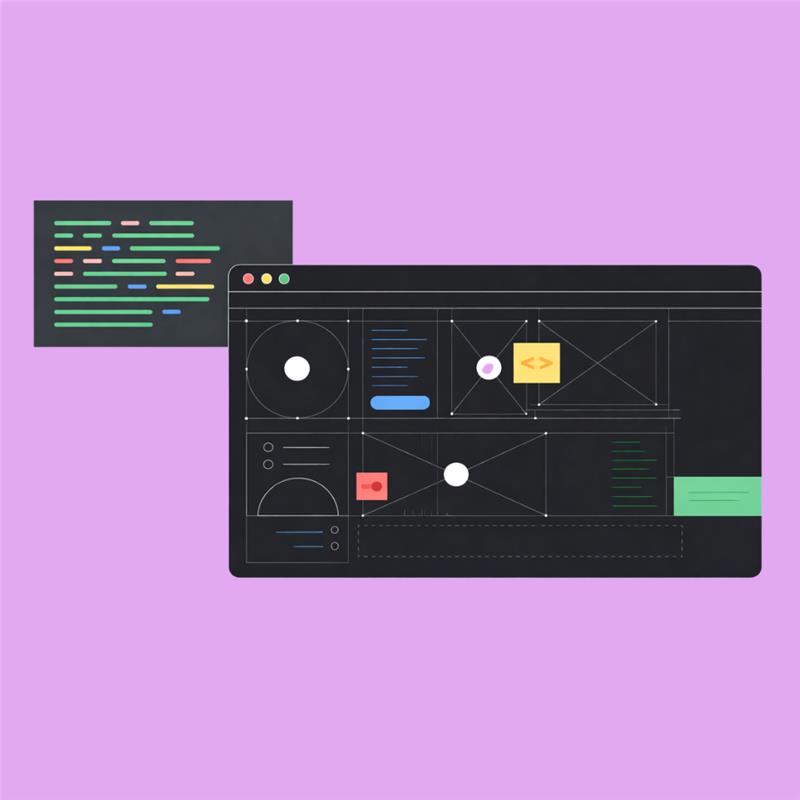
The vibe coding workflow operates as a structured system. It follows a clear sequence:
intent → risk → execution → refinement
where decisions are made in motion but remain anchored to system constraints. Each step builds on the previous one, ensuring speed does not compromise architectural control.
Senior architects begin with clarity on what the system must achieve. The focus is on defining boundaries that guide execution without slowing it down. This allows teams to move early while still aligning decisions with business goals, technical constraints, and expected system behaviour under real conditions.
Instead of investing time in detailed diagrams, architects sketch directions quickly. The goal is to understand system shape and dependencies without locking decisions prematurely. This approach surfaces unknowns early and enables flexibility, allowing the architecture to evolve naturally as more information becomes available during actual implementation and testing phases.
Execution begins with the most uncertain part of the system, not the easiest. This reduces the chances of late-stage failures. By validating risky components early, such as integrations or scaling constraints, architects ensure that the foundation is stable before expanding, preventing wasted effort on features built on unverified assumptions.
Rather than building isolated layers, the system is developed in thin, end-to-end slices. This ensures that every piece of work contributes to a functioning system. Early working flows provide faster feedback, reveal integration issues sooner, and help validate real-world usability before investing heavily in incomplete or disconnected modules.
Senior engineers optimise for speed by offloading repetitive work. AI tools, templates, and reusable patterns handle boilerplate, allowing focus on critical decisions. This shifts effort from writing code to shaping systems, ensuring that time is spent on architecture, trade-offs, and problem-solving rather than low-value implementation details.
Structure is not delayed to the end. Architects continuously reshape the system as it evolves, removing weak abstractions and improving clarity. This prevents technical debt from accumulating and keeps the system adaptable, ensuring that early decisions do not become constraints as complexity increases over time.
Decisions are validated through actual system behaviour, not assumptions. Testing with real data and realistic scenarios ensures that the system performs as expected. This reduces reliance on theoretical design and helps uncover issues that only appear under real conditions, leading to more reliable and scalable systems.
Once the system demonstrates working flows, structure is formalised. This includes refining abstractions, improving modularity, and standardising patterns. Delaying structure ensures that decisions are based on real insights rather than assumptions, resulting in a cleaner and more resilient architecture aligned with actual system behaviour.
Documentation focuses on what matters for future understanding and scalability. Instead of documenting everything, architects capture key decisions, trade-offs, and system boundaries. This keeps documentation concise and useful, ensuring that it supports decision-making without becoming a maintenance burden or slowing down development velocity.
Read more: From Custom Builds to 60 Stores: BVB Media eCommerce Platform Story
Vibe coding and traditional architecture workflows operate on fundamentally different execution models. One optimises for speed under uncertainty, the other for predictability under defined scope. The choice depends on system maturity, risk tolerance, and team structure.
| Parameter | Vibe coding workflow | Traditional architecture workflow |
| Speed of execution | High velocity with early system movement and rapid iteration cycles | Slower due to upfront planning, reviews, and phased execution |
| Risk handling | Risk-first approach; highest uncertainty components validated early | Risk deferred; critical issues often discovered later in execution |
| Documentation approach | Minimal, decision-focused documentation created during or after execution | Heavy upfront documentation before implementation begins |
| Adaptability to change | High; system evolves continuously based on real signals and feedback | Low to moderate; changes require rework across predefined plans |
| Feedback loops | Short and continuous; driven by working system behaviour | Long and delayed; dependent on phase completion and approvals |
| Team fit | Small, experienced teams with strong system intuition and ownership | Larger teams requiring alignment, coordination, and standardisation |
| Best use cases | 0→1 builds, high-uncertainty systems, fast-moving environments | Enterprise systems, regulated environments, multi-team dependencies |
| Failure impact | Failures surface early and are easier to correct | Failures surface late and are costlier to fix |
This workflow relies on experience. Senior engineers operate with built-in pattern recognition. They have seen similar system behaviours, failure modes, and scaling challenges before. This allows them to make fast decisions without losing control. Intuition is compressed knowledge applied in real time, guiding trade-offs, architecture choices, and execution flow.
When misapplied, the same approach breaks down quickly. Without experience, rapid execution turns into unstable systems, poor abstractions, and hidden technical debt. Failures are not anticipated, and refactoring becomes reactive instead of controlled. This is why vibe coding is an advanced execution model that depends on the ability to predict, absorb, and correct failure early.
Read more: How to Optimize Demo Request Flows Without Disrupting Sales Infrastructure
This workflow fits environments where speed and uncertainty dominate. Early-stage startups, 0→1 product builds, and ambiguous problem spaces benefit the most because requirements are incomplete and evolve during execution. In these scenarios, waiting for perfect clarity slows progress. A vibe coding approach allows teams to move early, validate assumptions quickly, and shape the system based on real feedback instead of static plans.
It is also effective in AI-driven development, where behaviour is probabilistic and cannot be fully specified upfront. For example, building an AI-powered recommendation engine, integrating third-party APIs with unpredictable responses, or launching a new SaaS feature with unknown usage patterns. In each case, rapid iteration with controlled adjustments enables faster convergence toward a working, scalable system.
Read more: Personalization vs Broad UX Changes in Conversion Rate Optimization Services
Vibe coding loses effectiveness in environments where predictability, coordination, and compliance outweigh speed. In such systems, uncontrolled iteration creates misalignment, audit risks, and integration failures.
Read more: Modern AI Data Stack Architecture Explained for Enterprises
Vibe coding is about executing with speed while maintaining invisible architectural discipline. The system may not look structured at the start, but every decision is anchored in constraints, trade-offs, and real-world validation. This is how senior engineers build quickly without compromising long-term stability or scalability.
If your team is trying to move faster without losing control, the problem is the execution model. At Linearloop, we design systems that allow high-velocity development without breaking architecture. Build fast, but build with intent, that is where real engineering leverage comes from.

Mayank Patel
Mar 19, 20266 min read

Product Engineering Guide: How Businesses Build Scalable Products
Most teams fail at building products because they treat product development as a sequence of features instead of a system. Product engineering fixes that gap. It brings engineering discipline into every product decision, from what you build first to how the system scales, evolves, and stays maintainable over time. Instead of shipping fast and fixing later, you design for reality: changing user behaviour, growing traffic, technical debt, and long-term cost.
If you’re building a SaaS product, an internal platform, or a customer-facing application, product engineering helps you move with clarity. You stop guessing. You start making trade-offs deliberately. This guide breaks down what product engineering really means, how it works step by step, and how you can apply it to build products that last.
Product engineering is the discipline of building a product as a long-lived system. It covers everything from architecture and development to testing, deployment, scaling, and continuous improvement across the product’s lifecycle.
At its core, product engineering connects three things that are often treated separately: how the system is built, how people use it, and how the business grows. The goal is to make sure every technical decision supports reliability, performance, and change over time.
Unlike isolated development efforts, product engineering focuses on:
This is why many businesses turn to product engineering services when they outgrow feature-driven development. Product engineering ensures early choices do not become long-term constraints, and that the product can evolve without constant rewrites or fragile workarounds.
Also Read: How to Work Agile in Product Engineering
Although the terms are often used interchangeably, product engineering and product development are fundamentally different in scope and intent.
The table below breaks down the difference clearly.
| Aspect | Product engineering | Product development |
| Core focus | Building a product as a scalable, long-term system | Delivering features to meet immediate requirements |
| Time horizon | Long-term product lifecycle and evolution | Short- to medium-term delivery goals |
| Decision-making | Architecture-first, with deliberate trade-offs | Feature-first, often driven by speed |
| Scalability | Designed into the system from the beginning | Addressed later, usually after issues appear |
| Maintainability | High priority, with clean, adaptable codebases | Often secondary to feature velocity |
| Business alignment | Engineering choices align with evolving business strategy | Alignment mainly at the feature or release level |
| Risk management | Anticipates technical debt, performance, and reliability risks early | Risks surface later as the product grows |
| Outcome | Products that scale, adapt, and remain stable over time | Products that ship quickly but may struggle to evolve |
Product engineering is never a single-team effort. It works only when decision-making and execution stay tightly connected across roles. Here’s who typically stays involved throughout the lifecycle:
As teams scale, many companies in the USA and India extend these roles through software product engineering services. This helps you access specialised expertise, move faster without overloading internal teams, and reduce operational friction.
Also Read: What Is Lean Product Engineering?A Practical Playbook for Architecture, Experiments, and Flow
The role of product engineering is to bridge business goals, user needs, and technology to build products that are scalable, reliable, and ready for long-term growth. It ensures that a product is not only developed correctly but also engineered to perform and evolve as the business scales.
Product engineering plays a critical role in defining product architecture, selecting the right technology stack, ensuring performance and security, and maintaining product quality throughout the lifecycle. It also supports continuous improvement by incorporating user feedback, optimizing performance, and enabling faster, safer releases.
By aligning engineering decisions with business strategy, product engineering helps organizations reduce risk, control costs, and deliver consistent value. This role becomes especially important for businesses leveraging product engineering services or outsourced software product engineering services to accelerate innovation in the USA and India.
Also Read: The Innovation-Ready Engineering Culture: A Practical Guide
A successful product engineering approach follows a structured lifecycle. Each phase builds on the previous one to ensure stability and growth.
This phase focuses on understanding business objectives, user needs, market opportunities, and technical feasibility. Clear requirements, priorities, and success criteria are defined here to reduce ambiguity later.
Design and architecture decisions are made with long-term scalability in mind. UX/UI design, system architecture, and technology stack selection are aligned with business goals and future growth plans.
Using agile methodologies, engineering teams build features incrementally. Continuous integration, code reviews, and best practices ensure quality, performance, and maintainability.
Quality is validated through functional, performance, and security testing. Automation plays a key role in supporting rapid releases without compromising reliability.
Products are deployed using DevOps practices that support frequent updates, high availability, and scalability. Cloud-native infrastructure enables efficient growth.
Post-launch, the product is monitored, optimized, and enhanced based on real-world usage, feedback, and evolving business needs.
Software product engineering services cover the full product lifecycle, from idea to scale. They bring engineering, design, quality, DevOps, and product thinking into a single system, rather than treating development as a handoff between teams.
These services typically span product discovery, architecture decisions, application development, testing, deployment, performance tuning, and continuous improvement. The focus is on building software that stays reliable, secure, and adaptable as usage and requirements change.
Many teams work with a software product engineering services company to move faster without accumulating technical debt. For businesses in the USA and India, outsourcing also helps you access specialised skills, shorten time-to-market, and control costs without compromising engineering quality.
Done right, software product engineering services turn product ideas into systems that can evolve, scale, and support long-term growth.
A good product engineering strategy shows up in outcomes. It changes how quickly you ship, how confidently you scale, and how much effort you spend fixing yesterday’s decisions. When engineering and product thinking stay aligned, the business feels the difference early and for longer.
Scalability is one of the most critical challenges businesses face as they grow. Without proper engineering foundations, products often struggle under increased users, data volumes, and feature complexity.
Product engineering addresses scalability through:
Many organizations leverage outsourced software product engineering services in India and the USA to scale efficiently while maintaining quality, speed, and reliability.
Product engineering breaks down when the structure is missing. Even capable teams run into friction when decisions are reactive, ownership is unclear, or systems are built without a long-term view.
Here are the challenges teams face most often, and how you can address them:
What you measure in product engineering shapes how teams behave. The right metrics balance delivery, quality, reliability, and long-term health. Instead of vanity numbers, you need signals that tell you whether the system is improving or quietly accumulating risk.
These metrics help you track progress without losing sight of engineering reality.
| Metric / KPI | What it tells you |
| Lead time for changes | How long it takes for a code change to move from commit to production. Shorter, stable lead times indicate efficient pipelines and healthy delivery practices. |
| Deployment frequency | How often you release updates. Higher frequency, when paired with stability, signals confidence in your architecture and release process. |
| Change failure rate | The percentage of releases that cause issues in production. A rising rate highlights gaps in testing, review, or system design. |
| Mean time to recovery (MTTR) | How quickly your team restores service after an incident. Faster recovery reflects good observability, ownership, and incident response processes. |
| System scalability metrics | How performance holds up as users, data, or load increase. This exposes architectural limits before they impact customers. |
| Technical debt ratio | The balance between new feature work and maintenance or refactoring. A growing ratio signals future slowdown if left unaddressed. |
| Defect escape rate | How many bugs reach production. This shows whether quality is being built into the system or patched later. |
| Infrastructure cost efficiency | How infrastructure spend scales with usage. Efficient systems grow cost in proportion to value, not complexity. |
Businesses should consider investing in software product engineering services when:
Early investment in digital product engineering services prevents costly rebuilds and enables smoother scaling.
Product engineering is a strategic capability that directly influences long-term business success. Organizations that invest in the right product engineering services, whether in-house or through outsourced software product engineering services, are better positioned to build products that scale, perform reliably, and evolve with the market.
As a leading product engineering services company in India and the USA, Linearloop partners with businesses to deliver end-to-end software product engineering services and solutions. By combining deep technical expertise with a strong understanding of business outcomes, Linearloop helps organizations design, build, and scale future-ready digital products that drive sustainable growth.
Mayank Patel
Jan 15, 20268 min read