We're officially a Great Place To Work® certified company, India | 2026–27

Mayur Patel
Mar 3, 2026
6 min read
Last updated Mar 5, 2026
When every milligram carries financial weight, manual tracking becomes a liability. VGR Gold needed more than a basic ERP. They needed a precision system that could eliminate manual gold tracking, digitise the entire refinery lifecycle, and ensure stage-wise traceability across melting, assaying, refining, casting, and recovery. The objective was to protect high-value assets through system architecture.
Linearloop built a refinery-grade ERP with a precision recovery engine at its core, designed to track residual particles, enforce controlled workflows, and provide real-time visibility across every stage. This case study breaks down how we engineered that system under tight constraints, extended platform capabilities, and delivered a zero-loss operational framework. Read on to see how we helped Gold VGR ERP move from manual processes to milligram-level control.
Read more: From Manual Coordination to Automated Logistics: Sarthitrans Case Study
VGR Gold is a Dubai-based gold refinery operating in a high-precision, multi-stage refining environment. Their workflow spans raw material intake, melting, assaying, refining, casting, and final recovery, each stage directly impacting weight, purity, and financial value. The business handles high-value material daily, where even microscopic discrepancies can translate into measurable loss.
The operating environment is accuracy-critical and regulatory-sensitive. Every batch must be traceable, documented, and verifiable across stages. Process deviations are not just operational issues. Instead, they carry financial and compliance implications. VGR needed systems that matched the precision of their physical operations.
Read More: Instream Case Study: Modernizing a Legacy CRM Without Downtime
Automation was not the goal. Precision was. VGR Gold needed a system that could account for every gram moving through the refinery, eliminate blind spots between stages, and replace manual reconciliation with system-enforced accuracy. The North Star was operational control at milligram-level fidelity.
The system had to be delivered fast, perform flawlessly, and operate in a zero-error environment. Engineering decisions had to balance speed with precision, without compromising traceability or security.
Read More: How Saffro Mellow Scaled with API-First D2C Architecture
Success was defined by operational trust. VGR needed a system that removed manual dependency, enforced accuracy at every stage, and created controlled visibility across the refinery lifecycle.
The complexity sat in the logic layer, where calculation errors, workflow gaps, or data inconsistencies could directly translate into financial risk. Every engineering decision had to protect traceability and precision.
Read more: The Hidden Cost of Trade Discounts on Business Growth
The stack was selected for control, extensibility, and speed of execution. We used Directus as the operational backbone and extended it where refinery-specific logic required deeper customisation. The architecture remained lightweight but precision-focused.
| Layer | Technology | Purpose |
| Backend & CMS | Directus | Core data management layer for refinery workflows, collections, and operational logic extensions |
| Frontend | Vue.js | Built stage-wise tracking interface aligned to refinery operations |
| Database | Directus-managed database | Centralised storage for batch data, recovery calculations, and documentation mapping |
| Authentication & Access | Directus RBAC + custom logic | Enforced stage-based permissions and controlled workflow transitions |
| Version Control | GitHub | Managed source control, deployment workflows, and iterative development cycles |
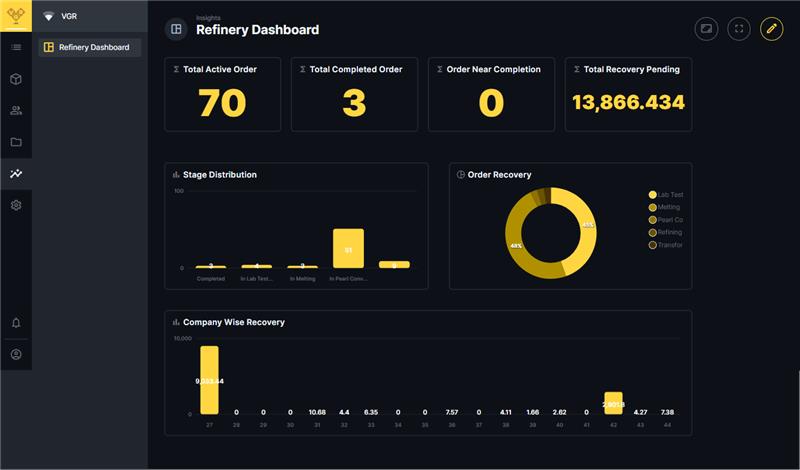
The architecture was designed around one principle: trace every gram, at every stage, without breaking data integrity. Instead of layering features on top of a generic ERP, we structured the system around refinery flow, ensuring stage transitions, weight calculations, and reporting logic were deeply interconnected and scalable.
Read more: Why Data Lakes Quietly Sabotage AI Initiatives
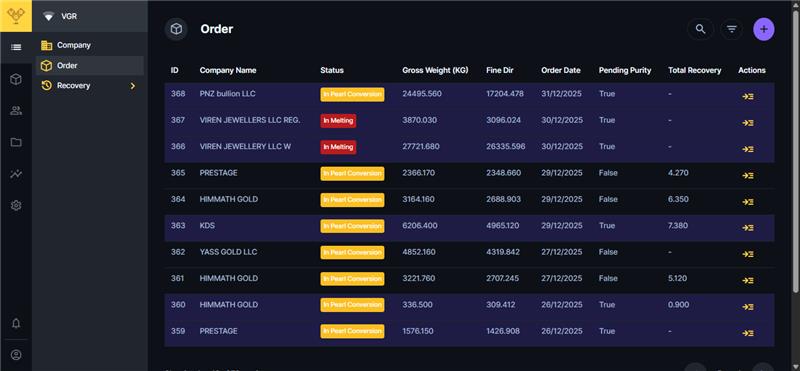
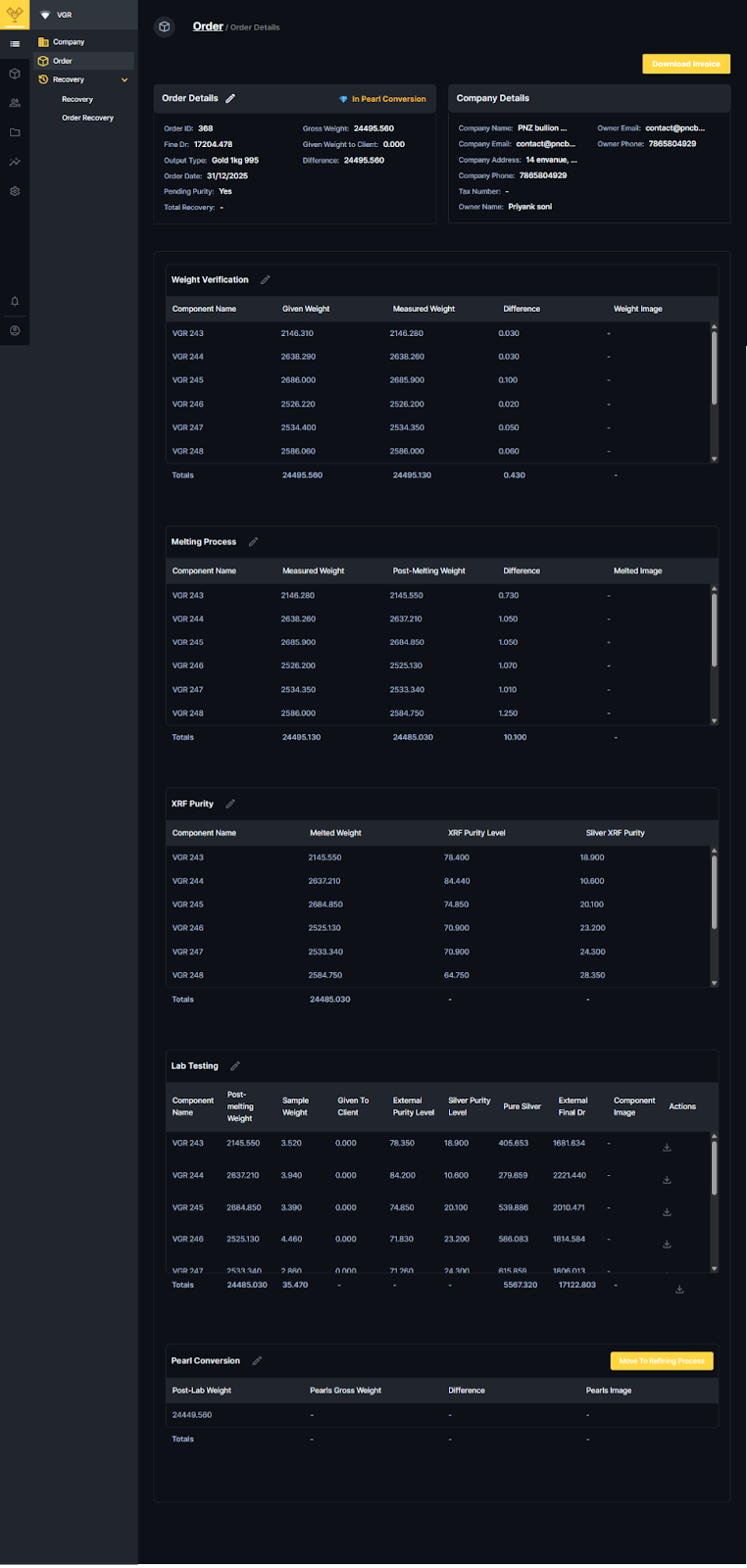
The timeline was fixed but the scope was complex. Execution required speed without sacrificing calculation accuracy or architectural integrity. We structured delivery around tight feedback loops and disciplined iteration to maintain control under pressure.
Read more: How to Deploy Private LLMs Securely in Enterprise
The ERP replaced fragmented manual tracking with a centralised, stage-driven system. Every refinery phase now operates within a controlled workflow where data propagates with validation.
Manual logs and spreadsheet reconciliations were eliminated. Batch entries, weight transitions, and recovery calculations are system-enforced, reducing operational gaps and dependency on cross-verification.
Stage-level visibility is real time. Managers can track batch progression, weight evolution, and residual quantities instantly. The recovery module calculates residual gold at each phase and updates reports dynamically, ensuring milligram-level traceability.
The platform also creates a scalable base for Phase 2:
Live metrics will follow post-launch, but structurally, the shift is clear: Faster workflows, reduced waste, stronger retention accuracy, and tighter operational control.
Read more: RAG vs Fine-Tuning: Cost, Compliance, and Scalability Explained
The leadership team validated the recovery logic, stage transitions, and reporting structure during simulation cycles. They highlighted three areas of impact:
Operational teams responded positively to the stage-aligned interface. The workflow mirrors physical refinery movement, reducing friction during adoption. Role-based controls were particularly appreciated, as they introduced structured accountability without slowing execution.
We remain actively involved post-deployment. The engagement has transitioned from build phase to optimisation and expansion. Phase 2 is already structured around controlled enhancement rather than feature expansion for its own sake.
Phase 2 roadmap includes:
GOLD VGR ERP demonstrates what happens when operational risk is addressed through system architecture. By replacing manual reconciliation with stage-aware workflows and milligram-level recovery logic, VGR moved from ledger-based tracking to a controlled, intelligent refinery platform. Precision became structural. Traceability became enforceable. High-value material handling is now backed by engineered accountability.
If your operations depend on accuracy, compliance, and zero-loss tracking, the solution is not another tool. it is architecture-first thinking. Linearloop builds systems designed for precision environments where mistakes are expensive. If you are ready to modernise critical workflows with the same level of control, let’s talk.

Mayur Patel, Head of Delivery at Linearloop, drives seamless project execution with a strong focus on quality, collaboration, and client outcomes. With deep experience in delivery management and operational excellence, he ensures every engagement runs smoothly and creates lasting value for customers.

How Univia Built a Scalable AgriTech System
Univia built a voice-first AgriTech platform now used by 5,000+ farmers, many with limited digital literacy, without compromising usability or system performance. Instead of forcing users to adapt to technology, the system was designed to work the way farmers already operate: voice-led, localised, and simple. The result is a platform that delivers real-time agricultural advisory, market data, and support in a format that doesn’t require training or technical understanding.
This case study breaks down how Linearloop helped design and deliver a system that balances accessibility, scale, and performance under real-world constraints such as low connectivity, high usage variability, and a non-technical user base. Go through the full case study to understand how the architecture, design decisions, and trade-offs came together to make this work.
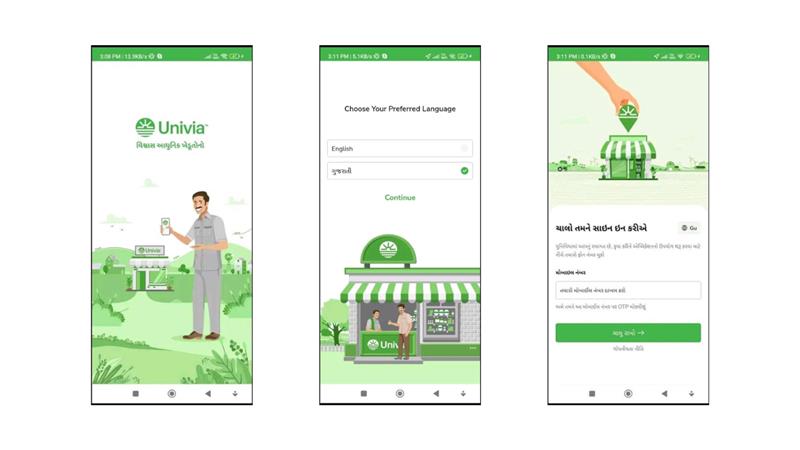
Univia is an AgriTech platform founded by Ravi Varmora, built to address structural gaps in Indian agriculture filled with fragmented supply chains, unreliable inputs, and limited access to timely advisory. The platform focuses on delivering real, actionable agricultural support across the farming lifecycle, from soil-level insights to market access.
At its core, Univia operates with a farmer-first approach. The goal is not just digitisation, but accessibility, making critical information like weather forecasts, mandi prices, and crop guidance available in a format farmers can actually use. It positions itself as a practical support system.
Read More: How BeatRoute Connects Brands, Distributors, and Retailers in One System

The North Star was to build a full-stack agricultural ecosystem that supports farmers across the entire lifecycle, beginning from soil analysis, to crop planning, real-time advisory, and market access. The goal was to create a system where farmers could get accurate, timely guidance and act on it without friction.
Accessibility was central to this. Every layer, from advisory to data delivery, had to work in real-time and in formats farmers could actually use. That meant simplifying interactions, localising content, and ensuring the system could deliver insights like weather updates, mandi prices, and crop calendars without requiring technical effort from the user.
Read More: From Custom Builds to 60 Stores: BVB Media E-commerce Platform Story
The system had to work within real-world constraints that directly impacted architecture, design, and execution decisions:
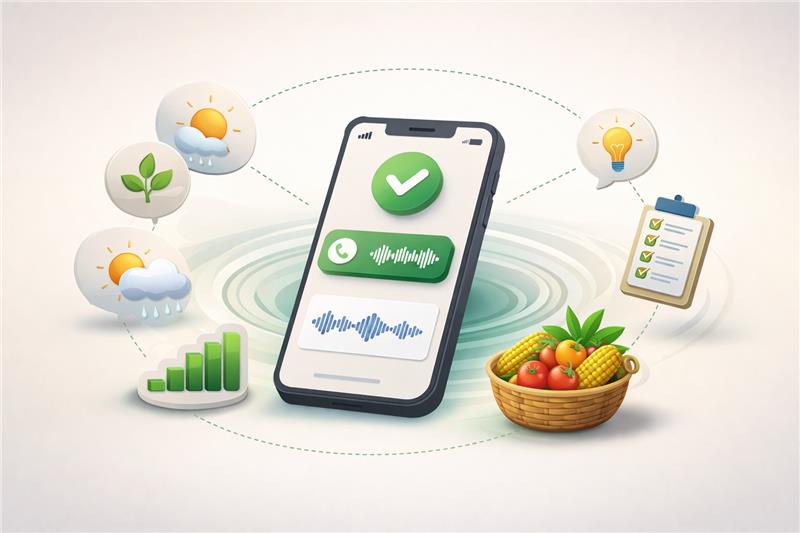
Success was not defined by traffic, installs, or surface-level engagement. It came down to whether farmers could use the platform without assistance and consistently rely on it for day-to-day decisions. If a user with no technical background could open the app, ask a question, and get a usable answer without friction, the system was working.
The second layer of success was seamless interaction between farmers and experts. Voice queries had to move through the system quickly, get resolved efficiently, and return meaningful responses without delays or breakdowns. Adoption by farmers and repeat usage became the only signals that mattered.
Read More: How Linearloop Built a Zero-Loss ERP for a Gold Refinery: Gold VGR ERP Case Study
The system had to handle multiple high-risk engineering challenges simultaneously, where failure in any layer would directly impact usability and trust for non-technical users:
Read More: Instream Case Study: Modernizing a Legacy CRM Without Downtime
The stack was selected to balance performance, scalability, and SEO while supporting real-time interactions and low-bandwidth usage.
| Layer | Technology | Purpose |
| Frontend | Next.js | Server-side rendering for fast load times and SEO optimisation |
| Backend | PHP (Laravel) | Core application logic and admin dashboard management |
| Backend (APIs) | Node.js | Scalable API layer for handling concurrent requests and real-time operations |
| Database | MongoDB | Flexible storage for unstructured data like voice notes and user queries |
| Mobile | Android Native | Lightweight, responsive mobile experience tailored for farmer usage conditions |
The system was designed around how farmers actually interact with information, not how typical apps are structured. Every architectural decision prioritised accessibility, low friction, and reliability under real-world constraints like poor connectivity and low digital literacy. Instead of layering features, the focus was on building a system that could translate complex agricultural workflows into simple, usable interactions while still maintaining backend robustness and scalability.
Also Read : How to Build an Async-First Engineering Tool Stack That Scales
The team followed an Agile workflow structured around Kanban to maintain continuous progress without blocking development cycles. Work was broken down into small, actionable tasks, allowing features like voice query handling, dashboard workflows, and localisation layers to be developed and tested independently. This ensured steady delivery without overloading any part of the system.
Iteration was key to reducing risk. Features were released in controlled phases, validated quickly, and refined based on performance and usability. This approach helped balance speed with stability, especially under a fixed timeline and evolving requirements around user behaviour and system load.
Also Read: How Saffro Mellow Scaled with API-First D2C Architecture
The system relied on external data sources and communication layers to deliver real-time, actionable insights to farmers. These integrations ensured that critical information like weather conditions and market prices was always up to date and accessible within the platform.
| Integration Type | Source | Purpose |
| Weather data | Third-party weather APIs | Deliver real-time weather forecasts to support crop planning and decision-making |
| Market data | Government / mandi APIs | Provide live mandi prices to help farmers make informed selling decisions |
| Communication systems | Email services | Enable notifications, alerts, and system-level communication with users |
Also Read: Multi-File Refactoring with AI: Cursor vs Windsurf vs Copilot
The platform achieved measurable adoption with 20,000+ downloads and 5,000+ active farmers using it for daily decision-making. More importantly, the system handled increasing volumes of voice queries and real-time data without downtime, validating the backend architecture under real-world conditions. SEO improvements also strengthened discoverability, ensuring the platform could scale its reach alongside usage.
The system was built with scalability in mind, allowing future expansion across data sources, advisory layers, and integrations. The architecture supports additional APIs, deeper personalisation, and extended workflows without requiring a rebuild. This ensures the platform can evolve as usage grows while maintaining the same level of accessibility and performance.
Also Read: How to Eliminate Decision Fatigue in Software Teams
Univia proves that building for real-world users requires more than clean interfaces and modern stacks. It requires aligning system design with how people actually think, speak, and operate. By prioritising voice, localisation, and simplicity, the platform removed friction at every layer and delivered a system farmers could trust and use without assistance.
If you’re building products where usability, scale, and real-world constraints collide, this is where most systems break. Linearloop helps you design and engineer systems that work in production. Reach out to Linearloop if you’re looking to build something that actually gets used.

Mayur Patel
Mar 27, 20266 min read

How BeatRoute Connects Brands, Distributors, and Retailers in One System
Retail distribution businesses still operate on fragmented systems. Field sales teams report activity through spreadsheets or WhatsApp. Distributor orders move through calls and manual records. Retailer data remains scattered across tools. For industries like FMCG, pharmaceuticals, consumer goods, and building materials, this lack of visibility slows decisions, weakens sales execution, and creates operational blind spots across the distribution network.
This case study examines how BeatRoute approaches this challenge. BeatRoute is a B2B SaaS platform designed to digitise distributor-led retail sales operations. It connects brands, distributors, and retailers through a single system that supports sales automation, order management, and real-time sales visibility. Continue reading to understand how this platform redesign addresses the structural problems of retail sales management.
Read more: Why Teams Optimize Conversion Rate Instead of Revenue
BeatRoute operates in industries where sales move through distributor networks rather than direct channels. Sectors like FMCG, pharmaceuticals, consumer goods, and building materials depend on large field sales teams that interact with distributors and retail stores daily. Brands need visibility across this chain, but operational data is often scattered across spreadsheets, phone calls, and informal reporting systems.
BeatRoute is a B2B SaaS platform built to modernise this distribution model. The platform centralises field sales operations by connecting brands, distributors, and retailers in a single digital system. It enables sales force automation, order management, route planning, and performance tracking while replacing fragmented reporting with real-time operational visibility across retail sales networks.
Read more: Why Some Lead Form Fields Kill Conversions
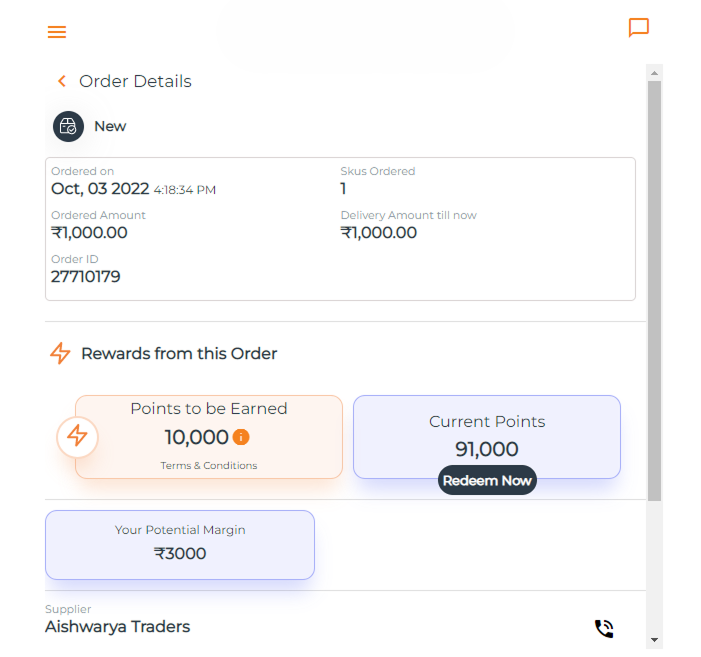
The project’s North Star was to improve visibility and operational control across distributor-led retail sales networks. The objective was to design a platform that helps brands, distributors, and field sales teams operate from the same system rather than fragmented tools.
Read more: From Custom Builds to 60 Stores: BVB Media eCommer Platform Story
Retail distribution operates through a multi-layered network of stakeholders. Brands depend on field sales teams to manage retailer relationships, while distributors handle order fulfillment and inventory movement across regions. In many companies, these activities still run through disconnected tools such as spreadsheets, phone calls, and informal reporting channels. This fragmented setup makes it difficult for businesses to track sales performance, monitor distributor activity, or maintain consistent retailer engagement.
The complexity increases as distribution networks scale. Sales teams operate across multiple territories, distributors manage inventory and payments, and retailers expect timely order fulfilment. Without a unified system, operational data remains scattered across different sources, slowing decision-making and creating gaps in visibility. BeatRoute addresses this structural challenge by designing a platform that centralises sales operations and connects all stakeholders in the retail distribution ecosystem.
Read more: How to Optimize Demo Request Flows Without Disrupting Sales Infrastructure
The engagement focused on designing the user interface and experience for BeatRoute’s sales enablement platform. The scope was limited to product design, to create clear workflows for retail sales operations used by multiple stakeholders in distributor-led sales networks.
Read more: How Linearloop Built a Zero Loss ERP for a Gold Refinery: Gold VGR ERP Case Study
For the client, success meant improving how retail sales operations function day to day. The platform needed to support stronger sales execution by giving field teams clearer workflows, faster order handling, and better visibility into sales activity across distributor networks. Operational efficiency, rather than feature complexity, was the primary benchmark.
The design also had to support smoother collaboration between distributors and retailers. Interfaces were structured around real operational workflows such as order placement, account tracking, and sales reporting. Instead of abstract product features, the focus was on building tools that reflect how retail distribution actually works across field teams, distributor partners, and retail stores.
Read more: Modern AI Data Stack Architecture Explained for Enterprises
Retail distribution platforms must support multiple stakeholders working within the same operational system. The BeatRoute design needed to accommodate three core user groups, each with distinct responsibilities, workflows, and expectations from the platform.
Read more: From Manual Coordination to Automated Logistics: Sarthitrans Case Study
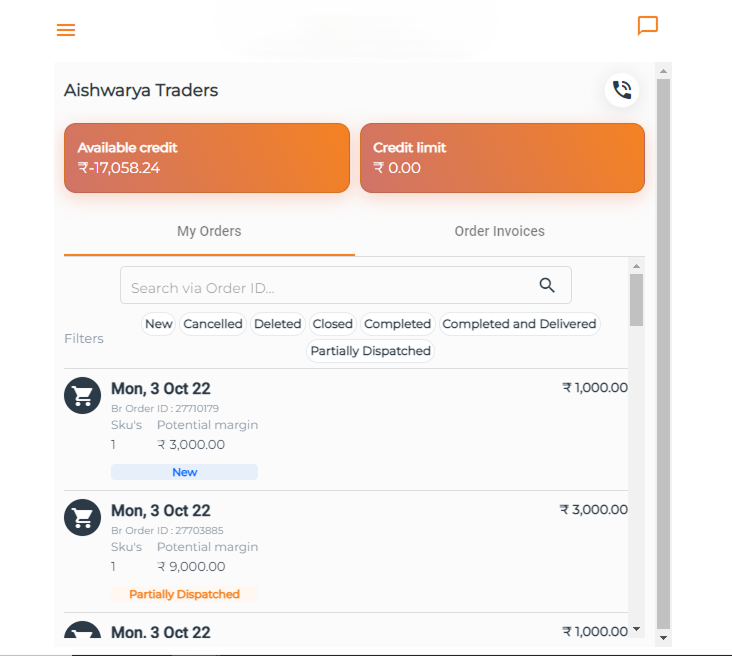
The design focused on creating clear operational interfaces for core retail sales workflows. Each module was structured to support a specific function within the distributor-led sales ecosystem, ensuring that field teams, distributors, and retailers could manage sales activities from a single system.
| Platform module | Operational role |
| Reward points management | Displays reward points earned by users and enables redemption through a structured interface, supporting incentive programs designed to motivate sales teams and channel partners. |
| Order management interface | Provides mobile-friendly workflows for creating, tracking, and managing retailer orders, enabling field sales representatives to place and monitor orders directly during store visits. |
| Statement of accounts dashboard | Allows distributors and traders to view transaction records, track due payments, monitor credit notes, and review payment history through filtered financial statements. |
| Sales activity visibility | Presents sales activity data and performance insights, enabling brands to monitor field sales operations and track retail engagement across their distribution network. |
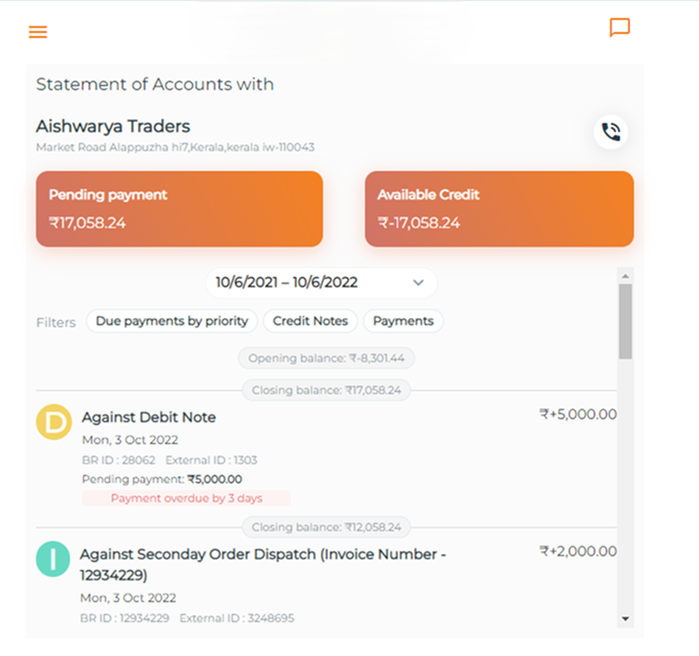
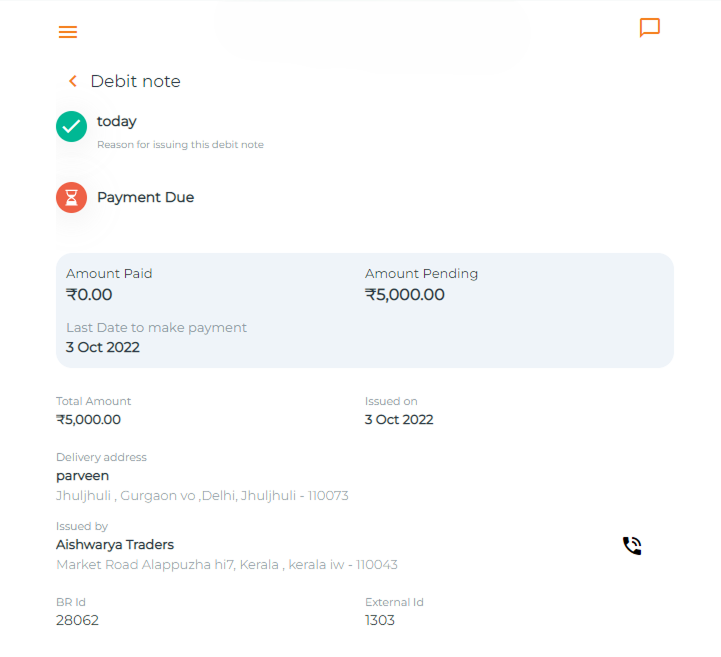
The project focused on interface design and user experience architecture rather than engineering implementation. The design environment was structured to support collaborative workflows, iterative feedback, and clear handoff specifications for product development teams.
Read more: Instream Case Study: Modernizing a Legacy CRM Without Downtime
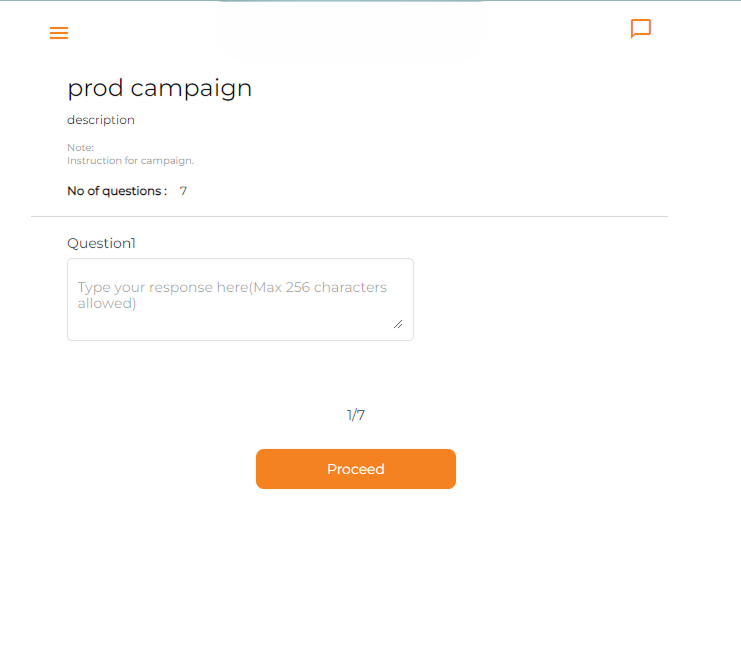
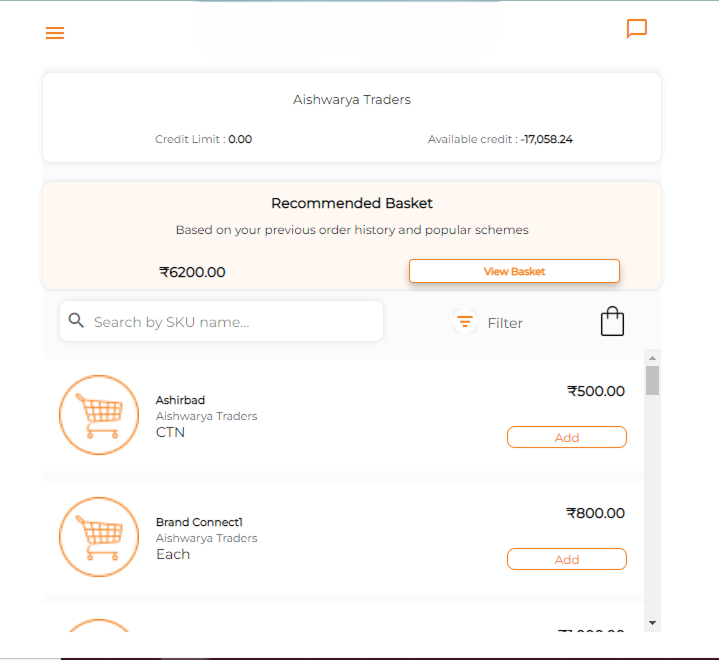
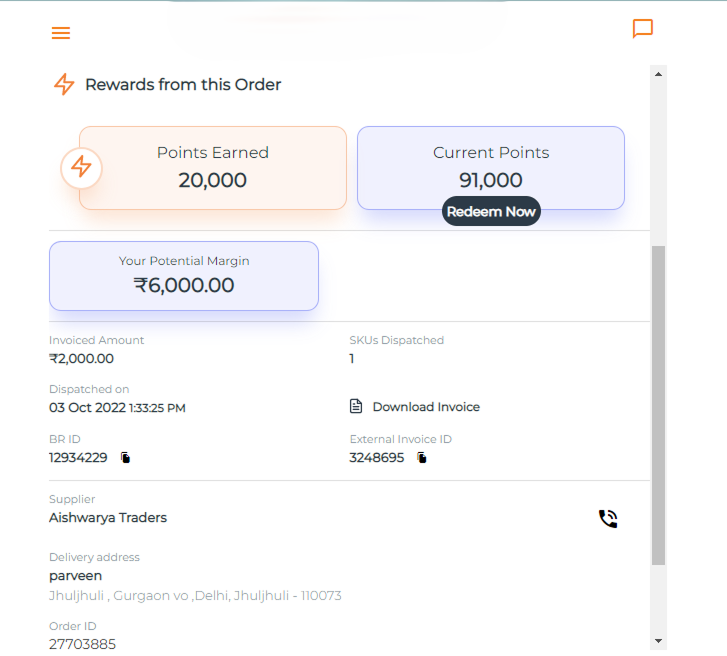
The design approach focused on building a unified operational system rather than a collection of isolated features. The goal was to structure the platform around real retail workflows so brands, distributors, and retailers could operate within the same visibility layer. Execution followed an Agile design process with iterative refinement and stakeholder collaboration.
The platform was conceptualised as a connected ecosystem where brands, distributors, and retailers interact through shared workflows. Interfaces were designed to reflect real operational relationships across the retail distribution chain rather than independent feature modules.
Design decisions prioritised workflow clarity. Sales activities, order management, and financial tracking were structured into intuitive interfaces that allow stakeholders to access operational data without relying on fragmented tools or manual reporting.
The project followed an Agile design approach where interface prototypes were continuously refined through structured iterations. Each cycle focused on improving usability, simplifying workflows, and aligning the product experience with field sales operations.
Design reviews were conducted with client stakeholders throughout the process. Feedback loops ensured the interface aligned with real retail distribution workflows and operational expectations before the final design handoff.
Read more: How to Deploy Private LLMs Securely in Enterprise
No third-party integrations were included during this engagement. The project scope was limited to designing the user interface and user experience architecture for the BeatRoute platform. The design focused on structuring core product workflows such as sales activities, order management, and account visibility. Integration with external systems was not part of the design phase, allowing the work to concentrate on interface clarity and operational usability.
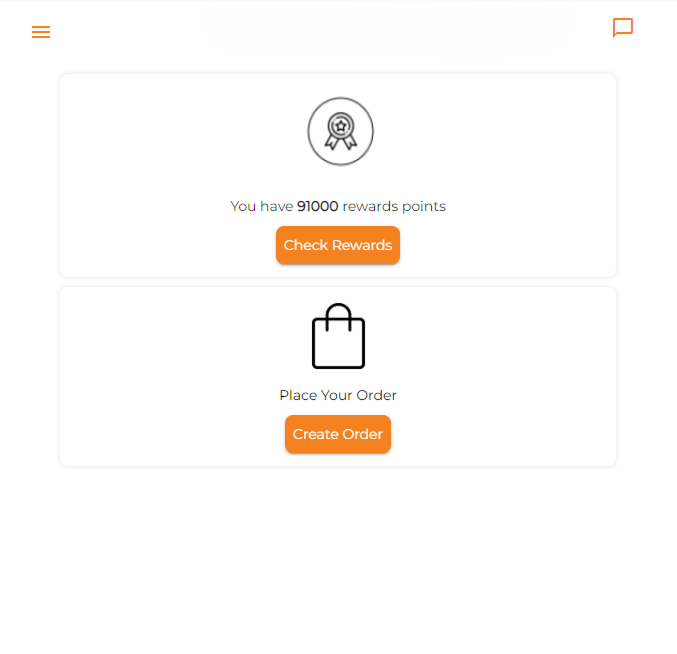
The design was received positively by the client and key stakeholders involved in the project. The interface structure aligned with the operational workflows used in retail distribution, making it easier to visualise how field sales teams, distributors, and retailers would interact with the platform.
Stakeholders particularly appreciated the clarity of the workflows and the usability of the interface. The design translated complex retail sales operations into structured screens and dashboards, enabling a clearer understanding of how the platform could support real-world sales activities.
Read more: RAG vs Fine-Tuning: Cost, Compliance and Scalability Explained
Retail distribution networks operate across multiple stakeholders, territories, and operational workflows. Without a unified system, brands struggle to maintain visibility across field sales activities, distributor coordination, and retailer engagement. BeatRoute demonstrates how thoughtful product design can bring these fragmented processes into a single operational platform, enabling clearer workflows, better data visibility, and more structured retail sales management.
If you are building a B2B platform that must support complex operational ecosystems, the design approach becomes critical. At Linearloop, we work with teams to design scalable product experiences for systems that involve multiple users, workflows, and operational dependencies. If you are planning a similar transformation, reach out to Linearloop to explore how the right design architecture can support your product vision.
Mayur Patel
Mar 16, 20266 min read